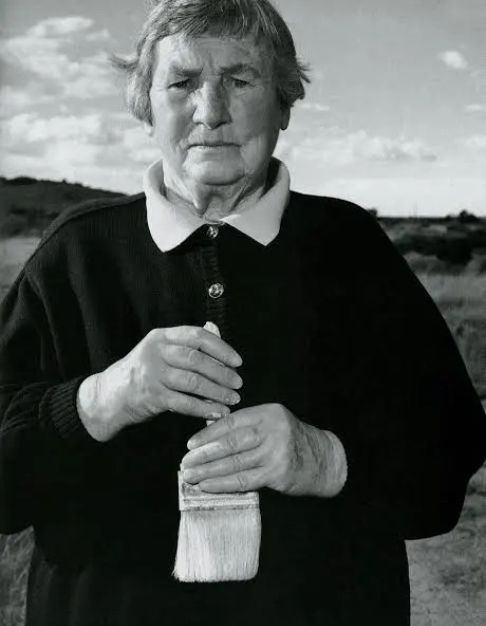
 Agnes Martin. Ph: Mary Ellen Mark, Vogue, November 1992
AGNES MARTIN
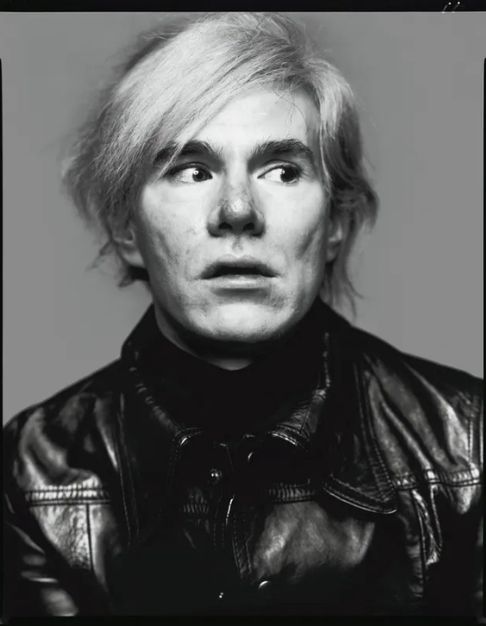 Andy Warhol. © Richard Avedon, 1969
ANDY WARHOL
Andy Warhol (United States, 1928–1987) was one of the most influential artists of the twentieth century and the central figure of Pop Art, a movement that radically transformed the relationship between art, consumption, and mass culture. He studied graphic design and, in the late 1940s, moved to New York, where he began a successful career as an illustrator.
In the early 1960s, he began to use images drawn from popular culture in his works, which he reproduced through mechanical techniques such as silkscreen. Onto these images he introduced his artistic mark: color, repetition, and a minimal yet decisive intervention that transformed the found image into a Warhol image. His works consolidated a distinctive and unmistakable style.
He not only achieved fame in the realm of images: he himself—his public persona—also constructed a style and became a global icon. His trajectory is singular in that it brings together work, aesthetics, and personal identity in a single gesture, where artistic production and the construction of his own image operate as part of the same strategy of dissemination.
At the age of fifty, in 1978, Andy Warhol embarked on the production of a monumental work titled Shadows, composed of one hundred and two paintings. The series was exhibited in 1979 in a SoHo loft in New York, a space acquired by the Lone Star Foundation (now Dia Art Foundation), where The Broken Kilometer by Walter De Maria is currently on view.
This expansive exhibition space could not accommodate the entire group: in its main gallery, sixty-seven pieces were presented to the public, and another sixteen were shown in the private rear gallery, making a total of eighty-three works. Shadows was conceived as a single work in multiple parts, whose final number is determined by the dimensions of the space in which it is installed.
Andy Warhol defined the 1979 presentation as “one painting in eighty-three parts,” as that was the number of canvases arranged within the gallery space. The works are executed in acrylic and photographic silkscreen on canvas, with paint applied using a mop. Each measures 193 cm in height by 132 cm in width.
The entirety of the one hundred and two pieces is conceived, in the curator’s words, as a series of “autonomous images—simultaneously graphic and indeterminate—that oscillate between abstraction and representation; their rhythmic sequence and chromatic variation deny a stable point of view, placing the viewer within a field of visual fluctuation rather than narrative coherence,” an idea reinforced by Warhol’s concept that there is no predetermined order for the display of the works.
FELIX GONZALEZ-TORRES
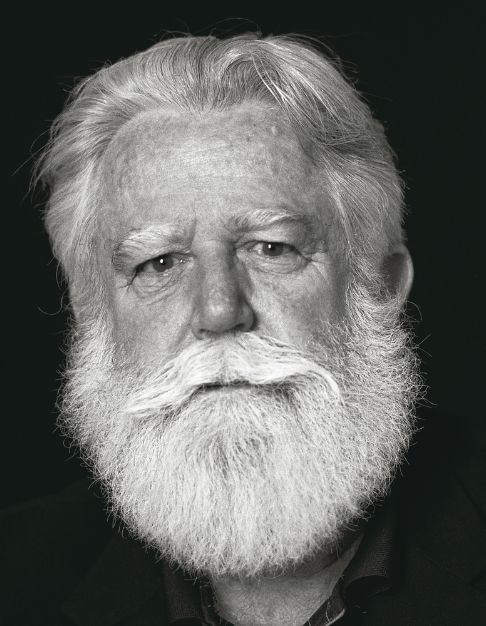 James Turrell in Flagstaff, Arizona, May 2011. Interview Magazine.
JAMES TURRELL
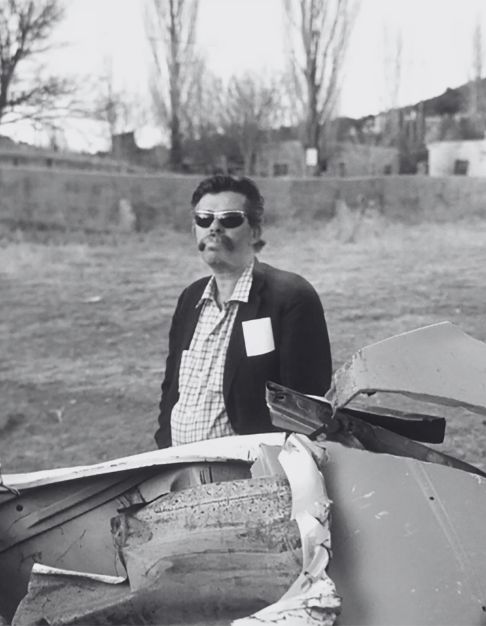 1966, John Chamberlain, Cerro Gordo Compound, Santa Fe, NM. Photo by Dan Budnick © Fairweather & Fairweather LTD/Artist Rights Society (ARS), New York
JOHN CHAMBERLAIN
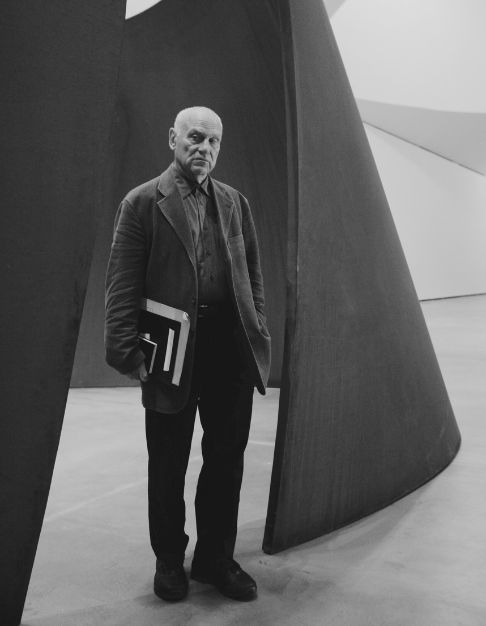 Richard Serra with Torqued Ellipse at the Guggenheim Museum, Bilbao (Richard Serra con Elipse retorcida en el Museo Guggenheim, Bilbao), 2005. Obra © Patrimonio de Richard Serra/Artists Rights Society (ARS), Nueva York. Fotografía: Ignacio Pérez.
RICHARD SERRA
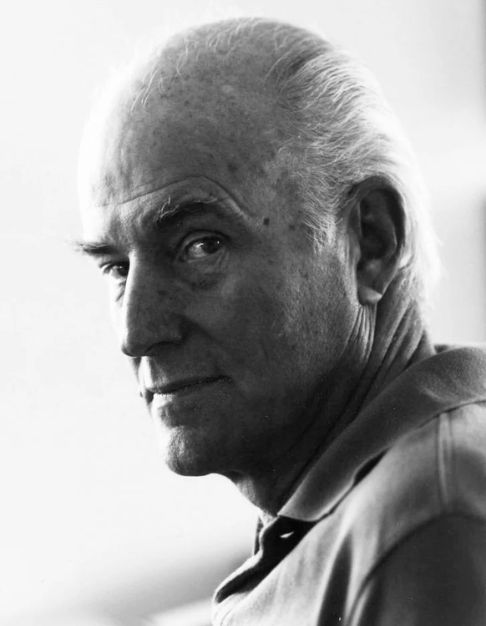 Robert Irwin.
Courtesy Philipp Scholz Rittermann/Pace.
Robert Irwin.
Courtesy Philipp Scholz Rittermann/Pace.
ROBERT IRWIN
Robert Irwin’s Excursus: Homage to the Square³ was originally commissioned by Dia for its former space at 548 West 22nd Street in New York City. The installation opened in April 1998 with the title Prologue: x18³ and consisted of eighteen interconnected rooms set apart by transparent scrims.
Irwin also covered the gallery windows with blue-and-gray theatrical gels, invoking a subtle color palette that changed in tone through shifts in natural light. He reconfigured Prologue that summer, adjusting the point of entry, installing vertical fluorescent tubes in each room, and introducing an intensity of vivid colors into the work. Retitled Excursus: Homage to the Square³, the second version has become a seminal work for Irwin, which Dia acquired in 2000.
For this new installation at Dia:Beacon, the artist redesigned Excursus to engage with the museum’s architectural and lighting specificities, a technique he has articulated as “site-conditioned,” in which “the sculptural response draws all its cues (reasons for being) from its surroundings.”
Irwin began his career in the 1950s as an abstract painter; however, he turned his attention to sculptural installations by the early 1970s. Irwin’s discovery of scrim while on a trip to Amsterdam in 1970 was pivotal to this transition and provided the conceptual means to both eclipse object-based production and intervene in the architectural conditions of a given space.
That same year, he created his first installation with the evanescent fabric, Fractured Light—Partial Scrim Ceiling—Eye Level Wire, at the Museum of Modern Art, New York.
This work concretized his interest in creating “conditional art” that makes the environment the form and, by doing so, heightens one’s perception of a space.
Realized almost thirty years later, Excursus: Homage to the Square³ furthered Irwin’s exploration of scrim-defined installations and marked his philosophical ambition to create a work that is nonhierarchical in form, encouraging a mobile style of viewership.
“The thing is not frontal,” he has remarked, “not linear, not sequential, there’s no beginning, middle or end. You could, essentially, enter anywhere.”
And, as its subtitle suggests, the work supports the influence of painting on his practice by invoking color relationships adapted from the renowned series by Josef Albers (1888–1976).
As stated by Irwin, Excursus extends Albers’s investigations of treating color as “a kind of infinite possibility.”
The presentation of Excursus at Dia:Beacon is particularly resonant, for Irwin was deeply involved with the museum’s design, including its exterior public spaces, main entryway, and windows.
Moving from the work’s redesigned scrim chambers, through the building’s subtle spatial interventions, and finally to the landscaped gardens and forecourt, visitors have the unique opportunity to experience an environment of which virtually every facet has been touched by the artist.
____
Robert Irwin was born in Long Beach, California, in 1928. Irwin studied at the Otis Art Institute (1948–1950), Jepson Art Institute (1951), and Chouinard Art Institute (1952–1954), all in Los Angeles.
He has exhibited widely in North America and abroad, including recent presentations at Secession in Vienna (2013), Whitney Museum of American Art in New York (2013), Corcoran Gallery of Art in Washington, DC (2012), and Walker Art Center in Minneapolis (2009). In 1993 the Museum of Contemporary Art in Los Angeles initiated a major retrospective of his work that subsequently traveled to Paris, Madrid, and Cologne.
The largest exhibition of Irwin’s work since, Robert Irwin: Primaries and Secondaries, was held at the Museum of Contemporary Art San Diego from 2007 to 2008. In the late 1990s, Irwin undertook a series of projects with Dia Art Foundation.
Shortly after realizing Prologue: x18³ and Excursus: Homage to the Square³ at Dia Center for the Arts (1998–2000), he began work on a master plan for Dia:Beacon; in particular, he designed the plans for the building’s entrance, windows, and outdoor spaces with an emphasis on the landscape environment.
Irwin’s work is also tied to his philosophical inquiries that delve into perception and experience, of which he has written extensively. His most notable texts are included in the book Notes toward a Conditional Art (Los Angeles: J. Paul Getty Museum, 2011).
Irwin lives and works in San Diego, California.
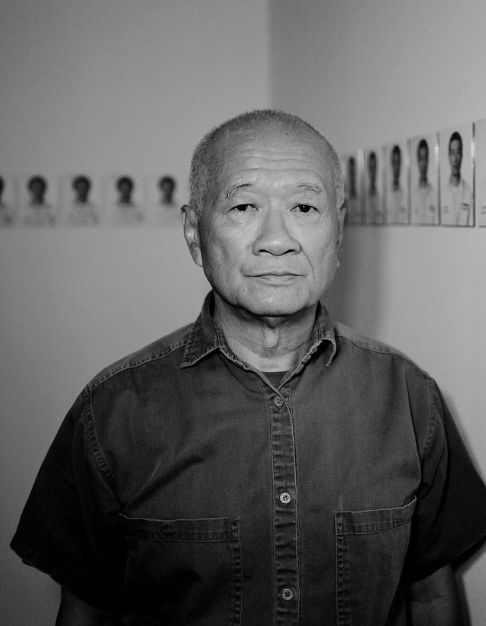 Tehching Hsieh, at Dia Beacon, 2025.Photograph by Marcus Maddox
TEHCHING HSIEH
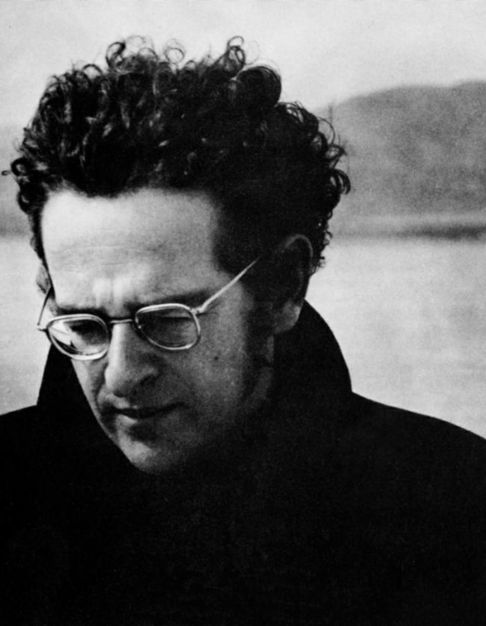 Photo: Two Lines Three Circles On The Desert, 1969. Mojave Desert, California. Still Photograph from the film © The Estate of Walter De Maria.
WALTER DE MARIA