
A ContraCOOLtural Chair
What does counterculture mean today? Can it be expressed through something material? What are the real possibilities of stepping outside hegemonic cultural logics? Can design operate as a channel for critique and reflection? Are objects ever neutral within political discourse? How does the world of objects communicate— or are able to communicate—these tensions? In what ways do our everyday surroundings and the objects that populate them shape how we live? What role does furniture play within our culture? Is there still room for something new in its design? Could a chair be countercultural and still remain a chair?
Starting from these questions, students from Licenciatura en Diseño at Universidad Torcuato Di Tella developed the projects presented here. Each begins with a critical gesture: interrogating the historical, functional, aesthetic, symbolic, and industrial norms that have defined furniture.
From this perspective,, the chair becomes an instrument capable of challenging established cultural orders, testing new languages through form, function, materials, modes of production, or the meanings it embodies.
This academic exercise revisits the discussions opened by Dick Hebdige, who in Subculture: The Meaning of Style understands objects and aesthetics as strategies of symbolic resistance to dominant codes. But it also confronts the paradox identified by Thomas Frank in The Conquest of Cool and by Potter & Heath in The Rebel Sell the system’s capacity to absorb and commercialize its own critiques, turning rebellion into commodity.
This is not about designing seats, but about rehearsing positions. About sitting with the discomforts of the present and, from there, imagining other ways of holding ourselves up. Perhaps the countercultural lies not in what the chair rejects, but in what it enables: supporting a position, a conversation, a shared moment.
Vera Ferreiro Vildósola, Alfredo Guzmán, Lucila Berenblum y Rocío Nerón Coiro
1| Anomya
Contemporary design often associates visual order, repetition, and homogeneity with quality, treating difference as a flaw or deviation. This project challenges that assumption by placing diversity, variation, and singularity at the center of the design process. Through this chair, the students explore how difference, irregularity, and individuality can also generate coherence and beauty—questioning the idea that uniformity is a prerequisite for aesthetic value and proposing instead a perspective in which diversity becomes the true engine of contemporary design.
Materials: Iron tubing, plush fabric, MDF
Fabrication techniques: Tube bending, stitching
Dimensions: 67 × 74 × 63 cm
2| WU
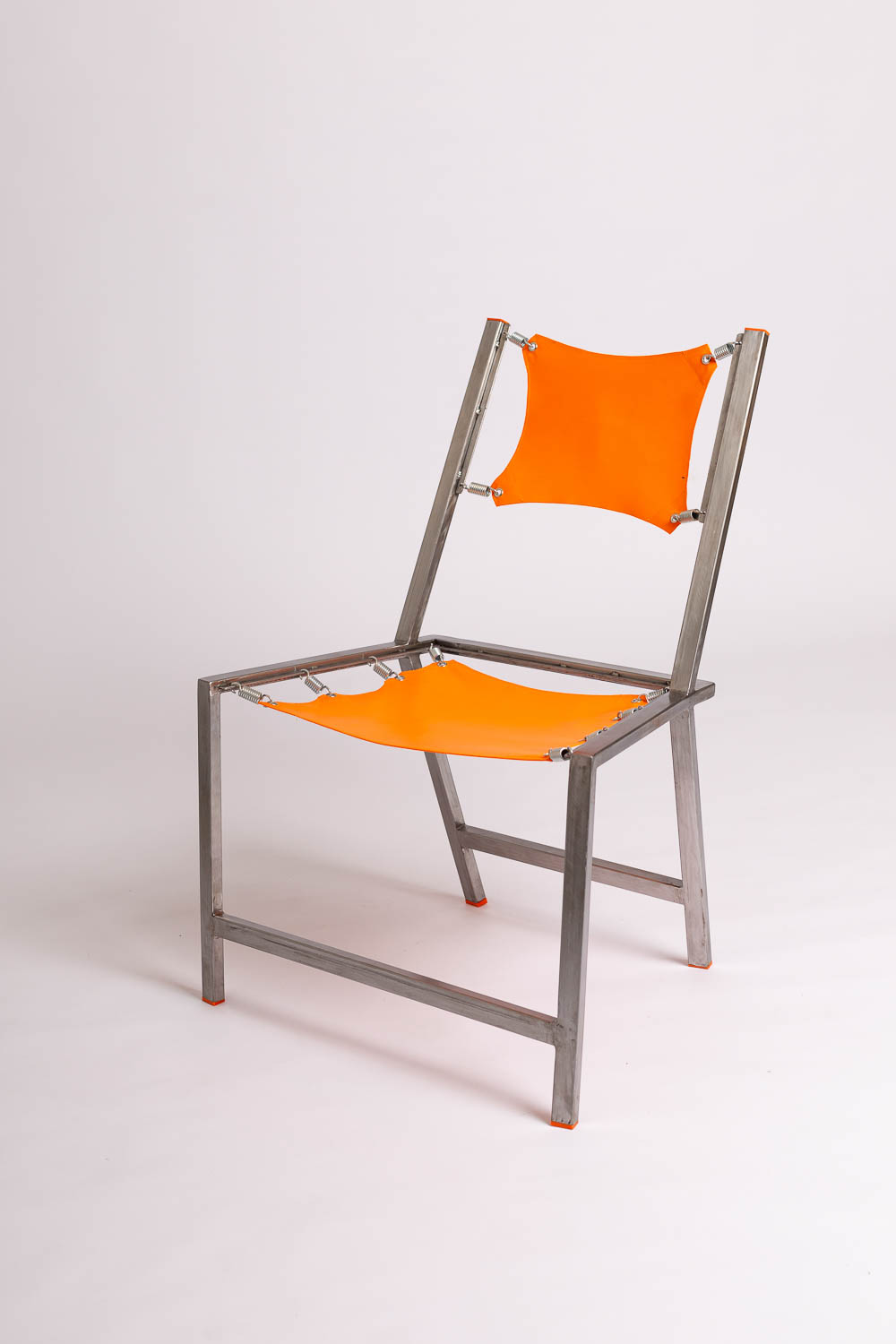
This project seeks to design a chair that redefines the act of sitting by challenging conventional notions of comfort and function. Rather than a neutral object, it is conceived as an active element that provokes movement, expression and emotion. It may appear stable, yet it surprises through flexibility, breaking conventional expectations. It does not aim to be minimalist or merely aesthetic; it embraces color, humor, and anxiety, allowing the body to simply feel. WU—short for Wake Up—encourages people to move, react, and connect with their bodies and emotions, serving as a reminder to remain present.
Materials: Steel tubing; canvas and springs
Fabrication techniques: Bending and welding
Dimensions: 60 × 88 × 70 cm
3| MUTO
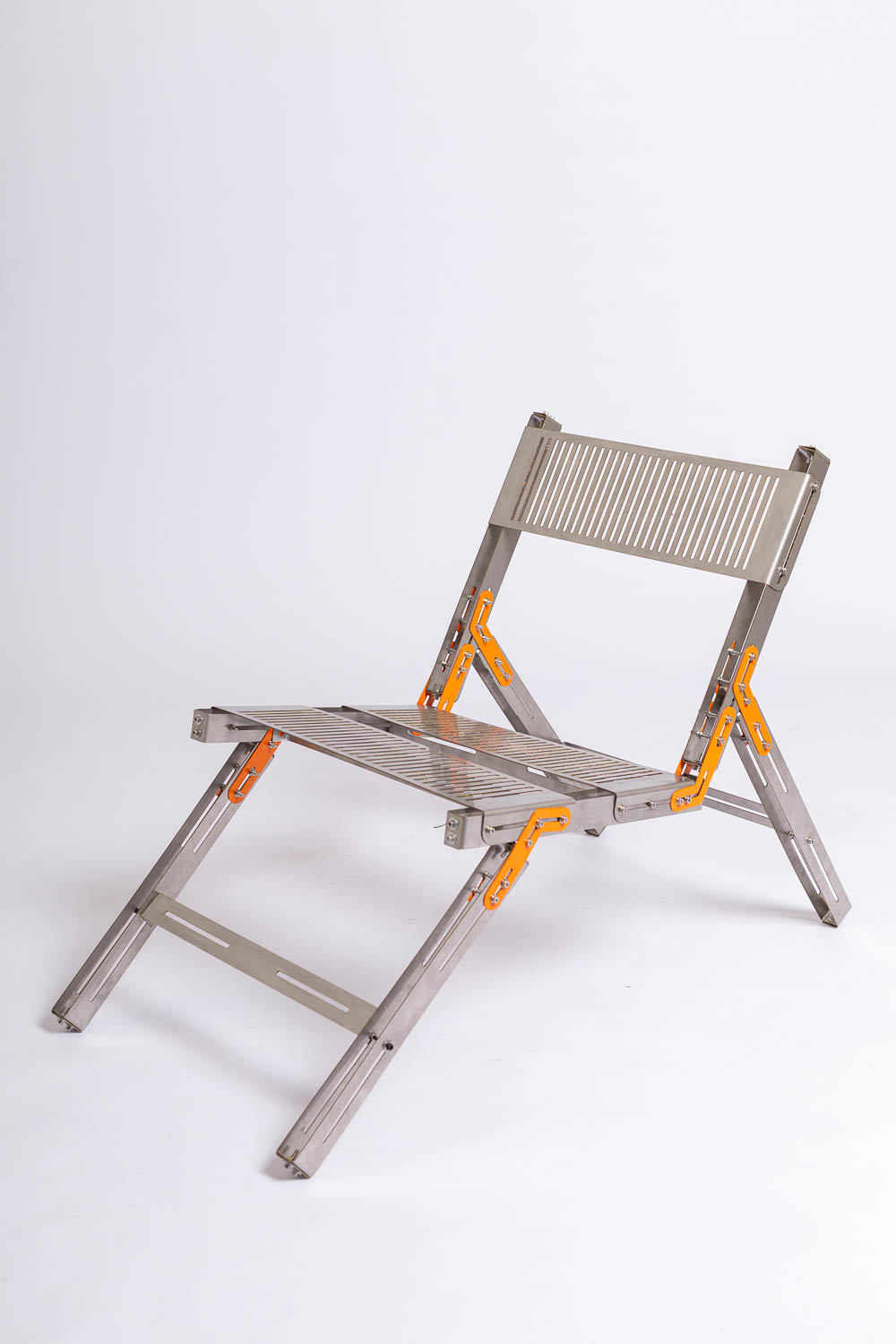
MUTO is a chair in constant transformation. Composed of three main pieces, it allows endless configurations that adapt to each context and user. Its countercultural essence lies in rejecting the notion of a fixed object: it does not seek to be replaced but to evolve. Through change, it proposes a new relationship with objects, where value emerges from the ability to mutate and remain relevant. MUTO invites experimentation, recombination, and reinvention of the act of sitting, challenging the rigidity of traditional design.
Materials: Stainless steel
Fabrication techniques: Laser cutting, folding, powder coating
Dimensions: 52 × 91 × 75 cm
4| Reconocer
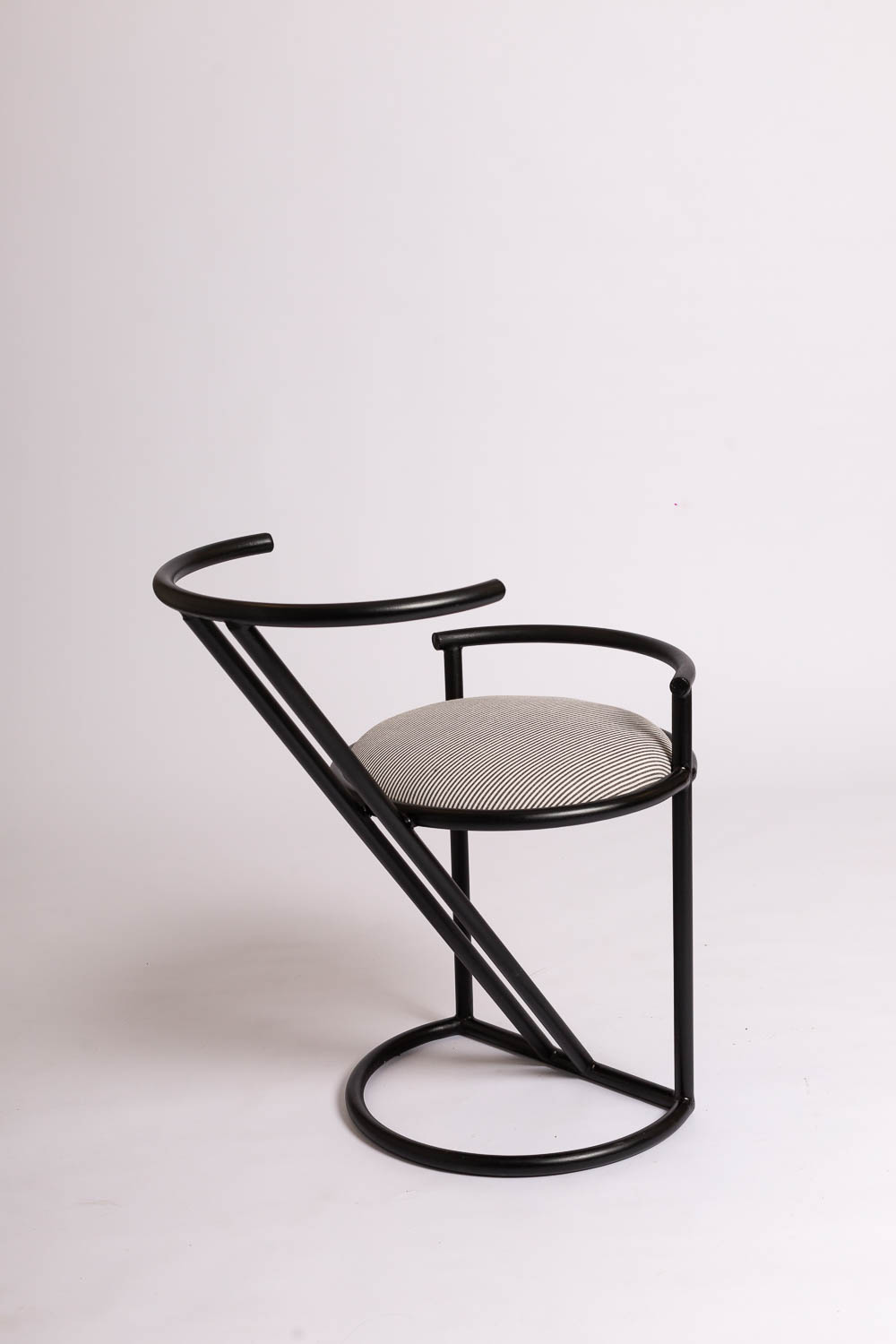
Reconocer is a chair designed to be sat on backwards. Its name—a palindrome—reflects the idea of looking at things from both sides: questioning what is established and rethinking the everyday. This object celebrates a not-so-common gesture—sitting backwards—as a countercultural act. Its structure guides and suggests this posture, inviting users to adopt a different relationship with their bodies and the space around them. Rather than imposing a single mode of use, Reconocer seeks to provoke an experience: inhabiting the familiar from a new perspective.
Materials: Steel tubing, upholstery
Fabrication techniques: Bending, welding, painting, upholstery
Dimensions: 48 × 79 × 67 cm
5| CUDA
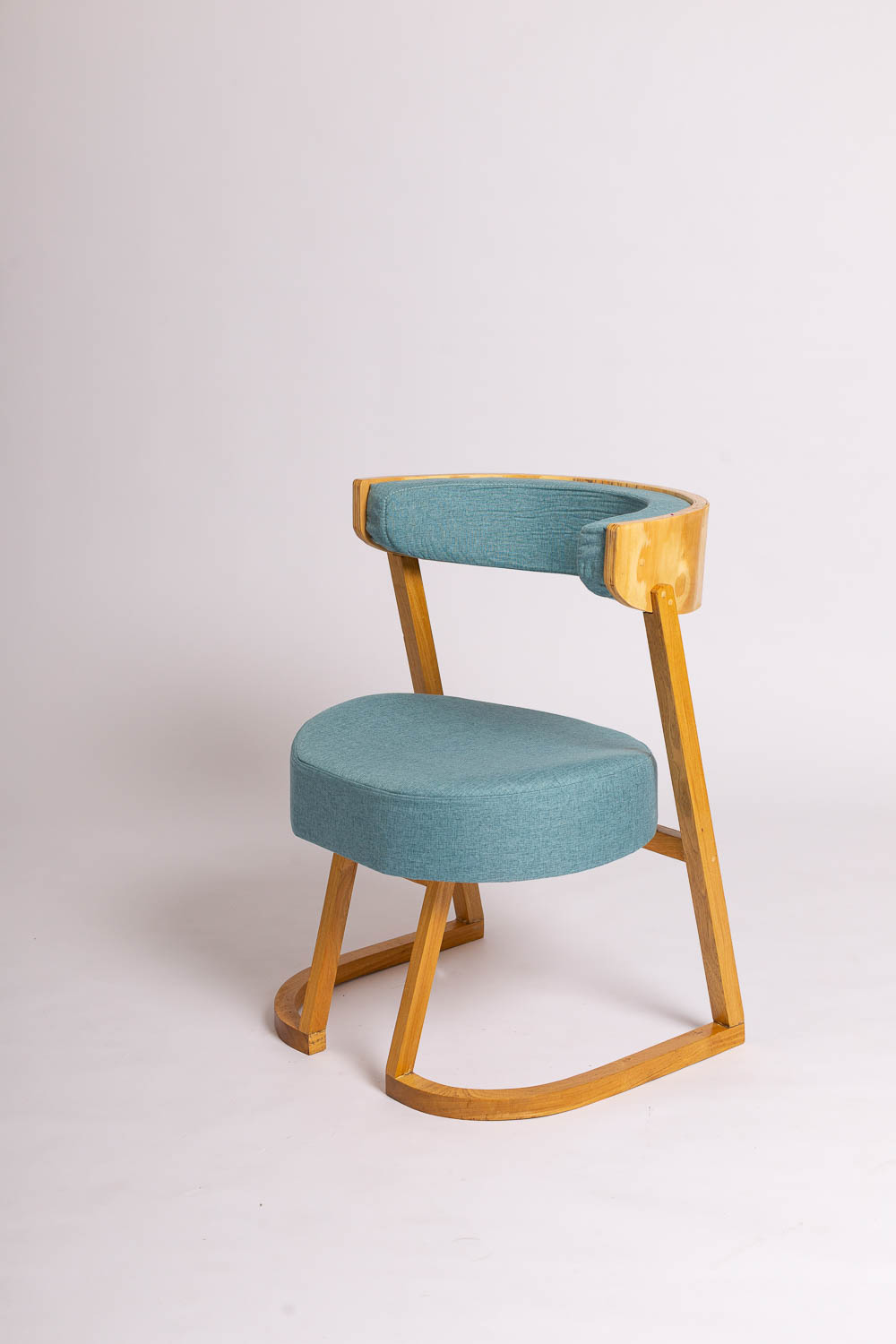
CUDA emerges as a response to the performative, extravagant, and superficial culture of contemporary society. It stands against anything that tries to be more than what it is. It is a quiet statement of quality, presence, and authenticity. Built from elemental forms—circle, square, triangle—it seeks to revalue simplicity of function and precision of form. It becomes a gesture toward a lost beauty regained through honesty, elegance and clarity. It honors the lost functionality of furniture and declares that this, in itself, is enough.
Materials: Gripa wood; pine plywood; foam; chenille fabric
Fabrication techniques: Cutting and assembly; curved lamination; upholstery
Dimensions: 75 × 56 × 50 cm
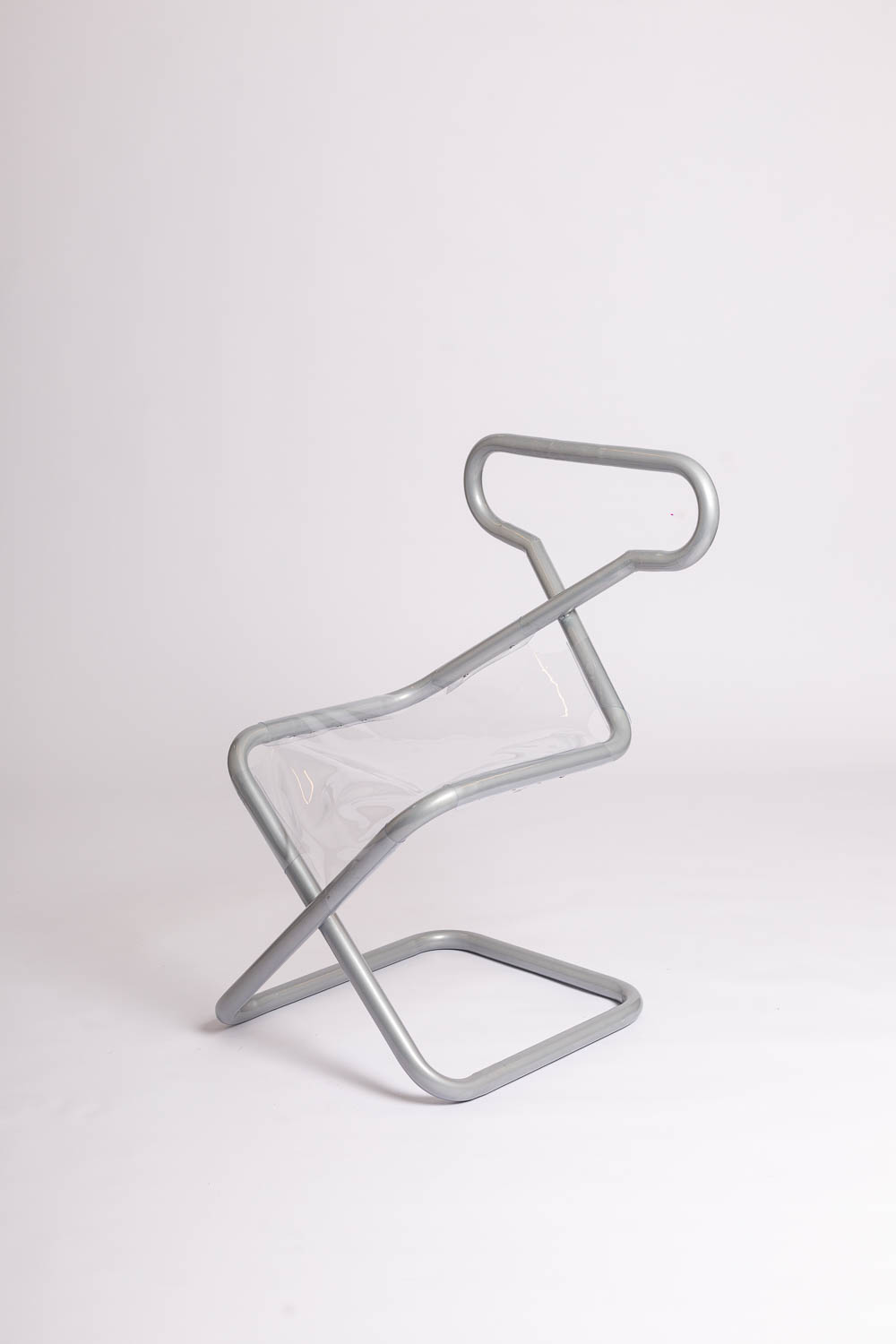
6| Inestable
Inestable questions the notions of comfort and stability typically associated with a conventional chair. Made from tubular steel, its linear structure incorporates bends and crossings that generate an immediate sense of instability and structural discomfort, enough to make one doubt its functionality. The proposal builds on this initial premise, creating a piece that, despite its deliberately fragile appearance, is in fact entirely solid and stable.
Materials: Bent steel, PVC
Fabrication techniques: Bending and assembly
Dimensions: 46 × 81 × 53 cm

7| Sedimentos
This project proposes a countercultural chair that reinterprets primitive formal languages through contemporary technological possibilities. It draws inspiration from the earliest structural solutions of humankind, where form arose from observation, intuition, and need: stacked stones, interlaced logs, structures that achieved balance without formal technique. That essential aesthetic, where joints and excess material remained visible, guides the present search. The design explores how this primary sensibility can engage with industrial processes today, recovering material honesty and questioning the established canons of contemporary design.
Materials: Kiri wood; steel; cow leather
Fabrication techniques: Cutting, welding
Dimensions: 88 × 68 × 77 cm
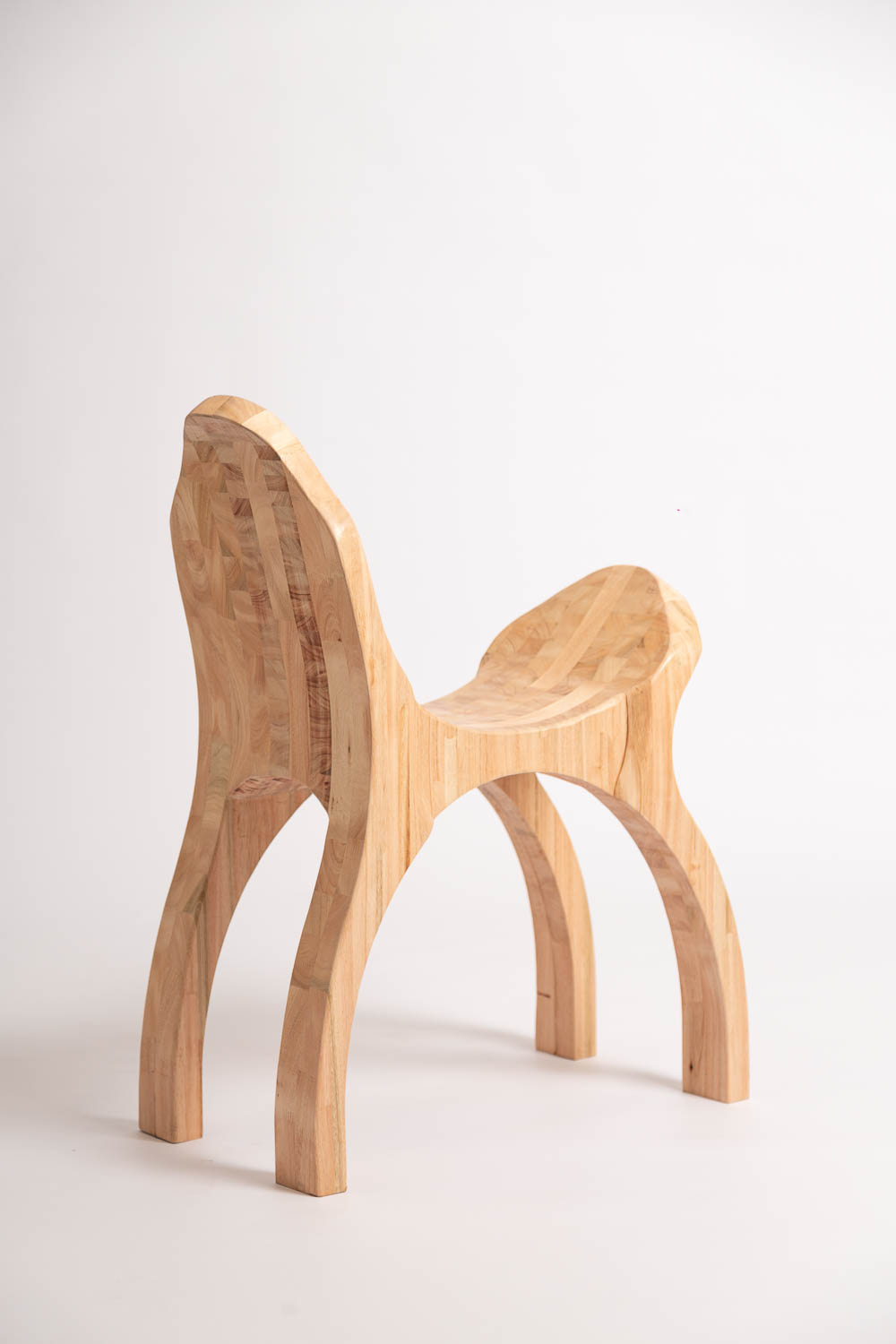
8| Yegua
Yegua reinterprets the traditional saddle through a contemporary point of view. The chair proposes a countercultural gesture: to use it, one must mount it: open the legs and adopt an active posture historically discouraged for women. Made of laminated wood, it combines warmth and firmness, suggesting a new relationship between body and object. The name refers both to the female horse and to a dismissive term used to diminish women who are free or powerful, reclaiming it as a symbol of autonomy and resistance.
Materials: Eucalyptus wood; pine rods; polyurethane lacquer
Fabrication techniques: 2D CNC routing; 3D machining; sanding; gluing
Dimensions: 30 × 87 × 65 cm
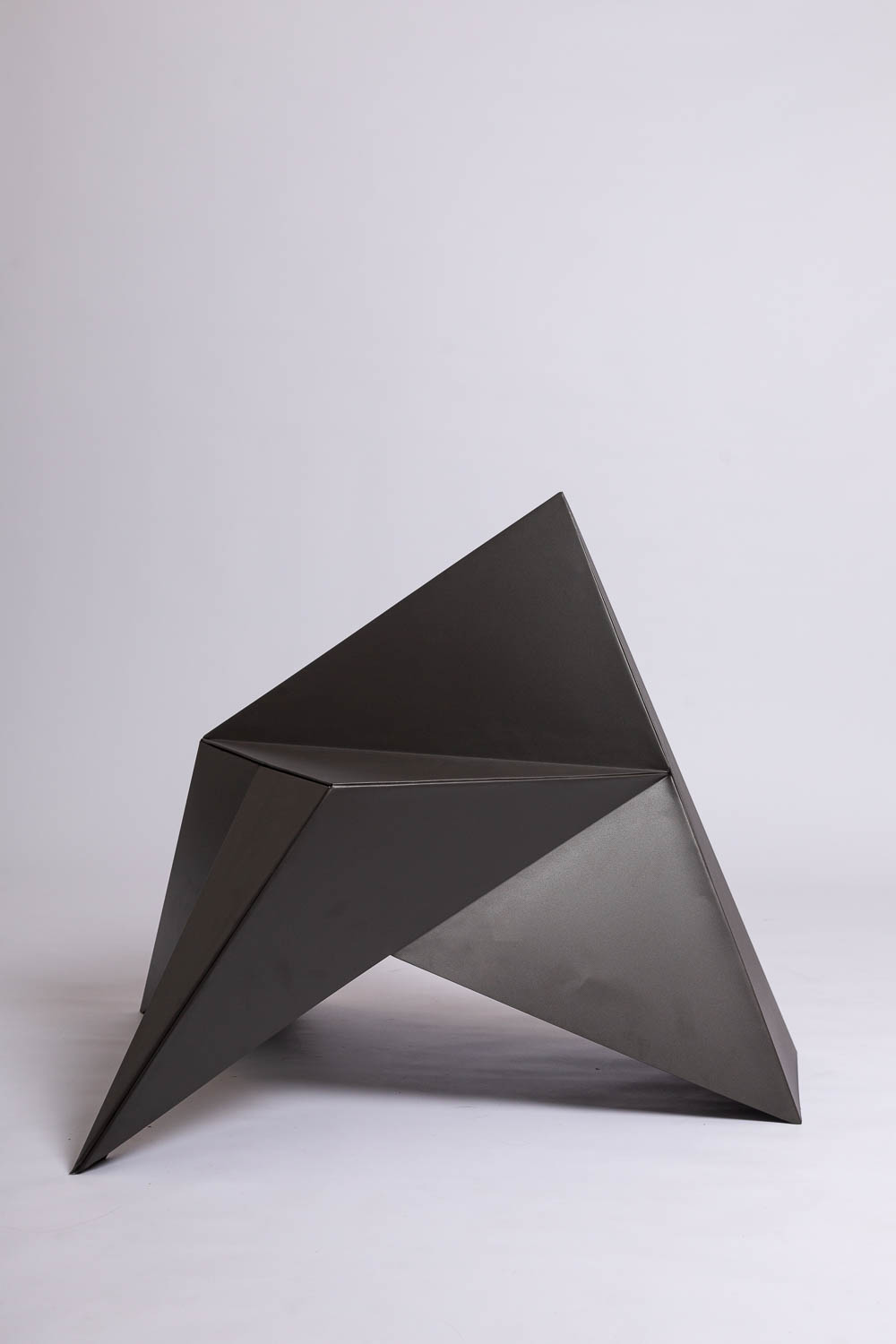
9| Tenkai
It begins with an act hidden within the everyday: a minimal pause within an accelerated rhythm, one that only appears when one chooses to stop. Far from the logic of algorithms and constant exposure, its value lies in the attentive, quiet experience it enables. The chair invites reconsideration of taken-for-granted gestures: how we sit, where we look from, and what relationship we form with objects. Its structure, made of unfolding triangular planes, shifts depending on the point of view. Built from folded steel sheet, Tenkai hides its joints to suggest a single continuous gesture.
Materials: SAE 1010 steel sheet, 1.6 mm
Fabrication techniques: Cutting, folding, welding
Dimensions: 100 × 84 × 82.8 cm
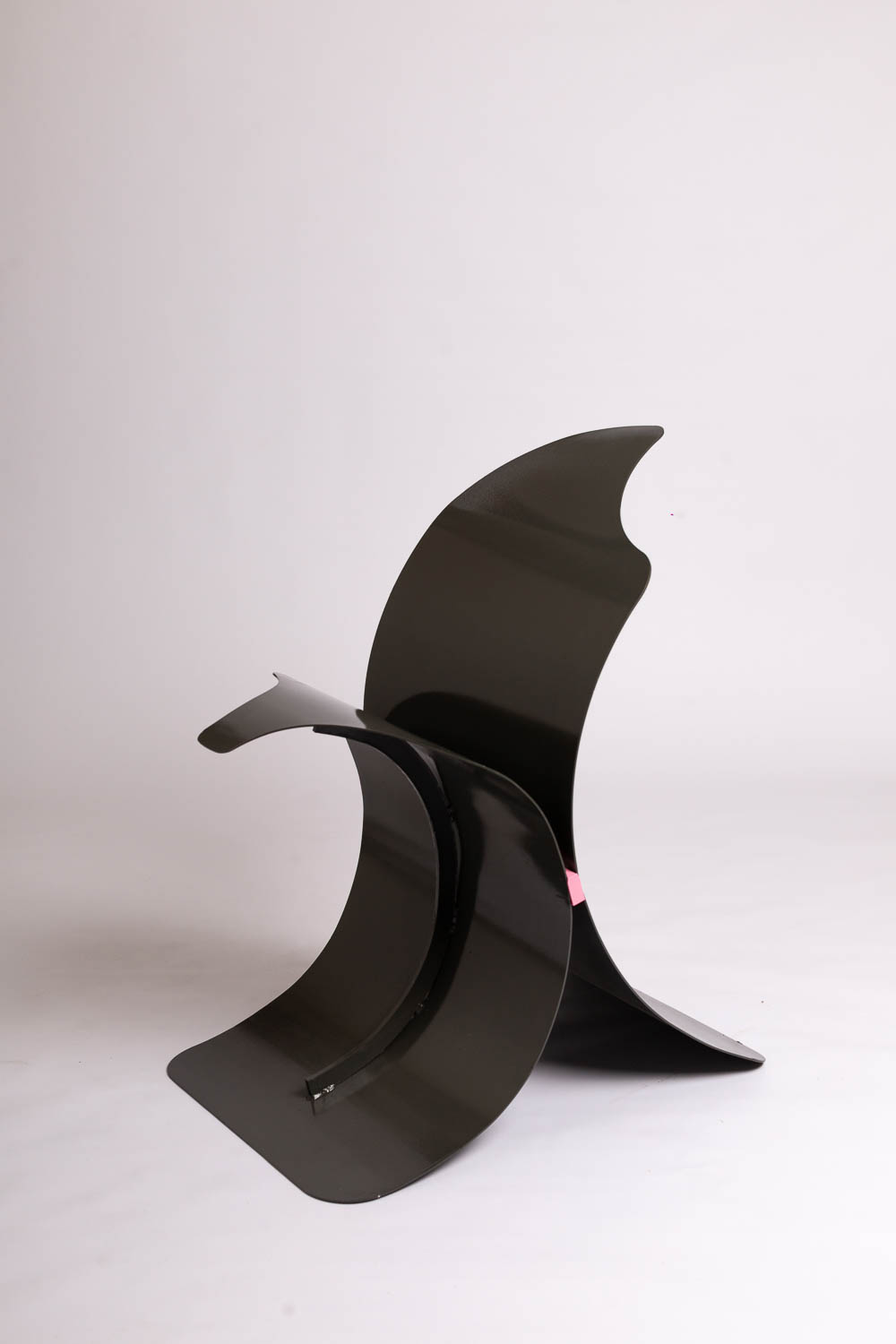
10| Taboo
Taboo is a chair inspired by sex and sensuality. Its design explores organic shapes that evoke the fluidity of the human body: how it moves, curves and offers itself. The piece proposes an experience in which the user not only sits but actively participates in a game of exposure and desire. When occupied, it opens the legs and places the body in an intimate, vulnerable position, revealing what is usually concealed. Taboo transforms the everyday act of sitting into a gesture charged with eroticism.
Materials: Stainless steel; structural profile; plywood
Fabrication techniques: Bending and rolling; slotted wood bending
Dimensions: 52 × 94 × 72 cm
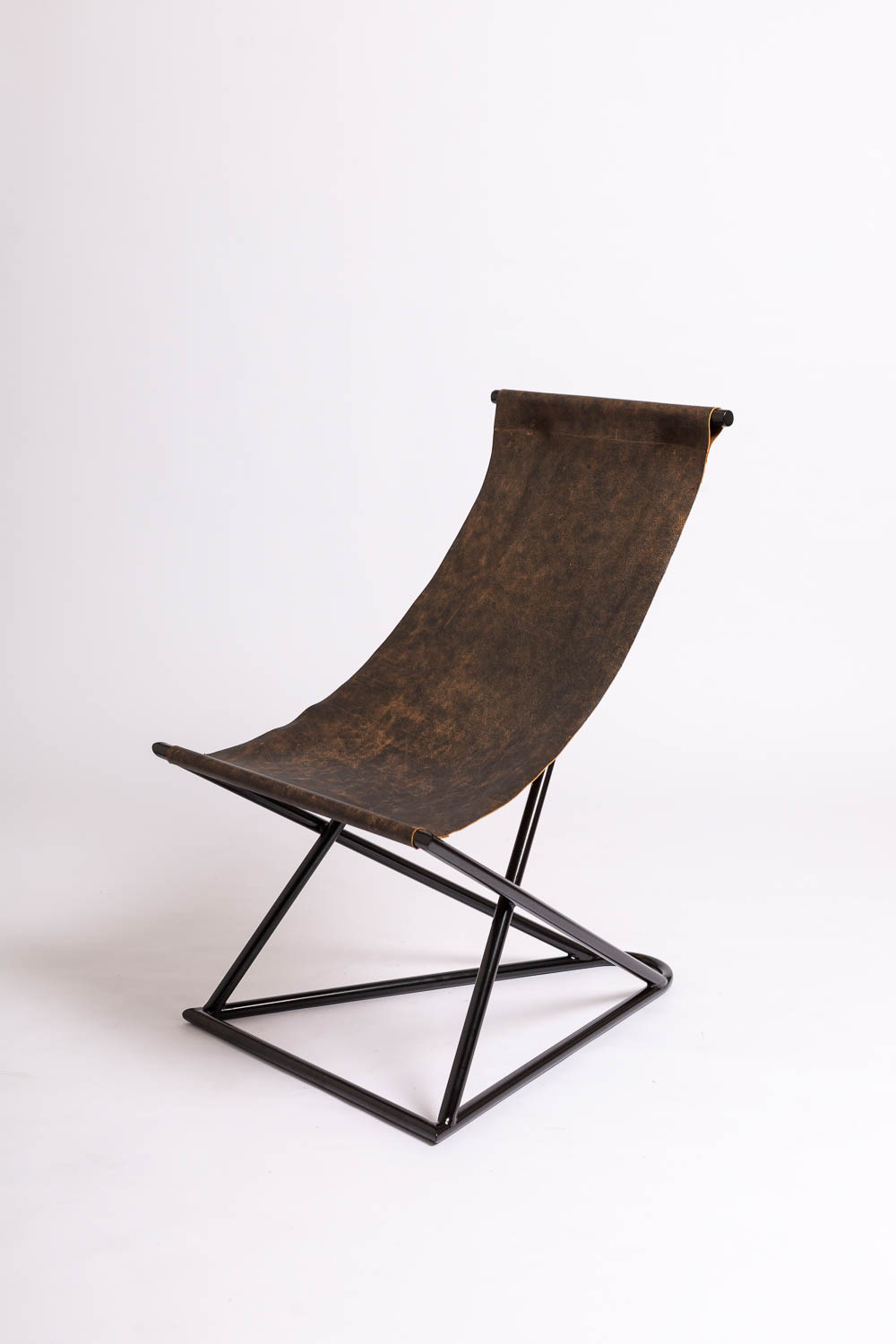
11| Artemisa
Artemisa proposes a collision between worlds. The chair combines craft and industry, mixing ancestral materials with contemporary processes. Its language is one of contrast: lines and planes, industrial precision and the emotional character of handmade work. Metal represents modernity and its versatility; leather evokes modes of production left behind yet still valued. The name reflects this duality: “Artemisa” refers both to the Greek goddess of the natural and handmade, and to NASA’s Artemis program, symbol of technology and the future. The chair thus exists in a constant balance between the ancestral and the contemporary.
Materials: SAE 1010 steel tubing; cow leather
Fabrication techniques: Cutting, bending, MIG welding; powder coating; hand-cut leather
Dimensions: 50 × 94 × 77 cm