October 22nd, 2015
October 22nd, 2015
ProaMúsica: Esteban Buch
Adelantando la apertura del XIX Ciclo de Conciertos de Música Contemporánea del Teatro San Martín, Fundación Proa presenta a Esteban Buch en conferencia.
Miércoles 28 de Octubre - 18 hs.
Escritor, investigador y catedrático franco-argentino, Esteban Buch explorará en esta charla la presencia de lo real-documental en la ópera del siglo veinte, tomando como antecedentes Der Lindberghflug de Kurt Weill y Bertolt Brecht (1929), Intolleranza de Luigi Nono (1960), y Nixon in China de John Adams (1987). Aliados, una ópera en tiempo real, obra del propio Buch junto al compositor Sebastián Rivas, abre esta Temporada del Ciclo de Conciertos de Música Contemporánea, y es estreno latinoamericano en el Teatro Gral. San Martín, los días 31 de octubre y 1 de noviembre de 2015.
El subtítulo “una ópera en tiempo real” alude, por un lado, al tratamiento instantáneo de las voces y los instrumentos con la tecnología desarrollada en el IRCAM (Institut de Recherche et Coordination Acoustique/Musique, Centre Pompidou, Paris) donde ese concepto juega un papel clave desde Répons (1981) de Pierre Boulez; y por otra parte alude al tema de la ópera que se inspira directamente de la realidad política chilena de los años 90, particularmente del encuentro de Augusto Pinochet y Margaret Thatcher en Londres (1999), durante el arresto domiciliario del primero por orden del juez Baltasar Garzón.
Actividad gratuita, hasta agotar capacidad de auditorio.
Informes: auditorio@proa.org
4104-1001
October 22nd, 2015
ProaTeatro. Direccionario 2015

Luego de las presentaciones de Javier Daulte, Mauricio Kartun y Ricardo Bartis durante 2014,ProaTeatro presenta la edición 2015 de Direccionario, un ciclo de conferencias performáticas que, mediante un cruce entre el performace art y el teatro, propone una reflexión sobre el director y su accionar como artista.
Durante una serie de encuentros mensuales en el Auditorio, el ciclo invita a emblemáticos directores de Buenos Aires a presentar el recorrido que los llevó a concebir su obra. Este año, Direccionario recibe a Rubén Szuchmacher, Mariana Obersztern y Alejandro Tantanian, entre otros importantes dramaturgos locales.
Una vez por mes, un director presenta su universo de referencia, sus ideas, emociones y anécdotas mínimas que ponen en palabras y en gestos algo tan efímero, privado e intangible como la concepción teatral.
PROGRAMACIÓN 2015
Direccionario XII: Walter Jakob /Agustín Mendilaharzu – sábado 7 de noviembre – 16:30 hs
Direccionario XI: Pompeyo Audivert– sábado 10 de octubre – 16:30 hs
Direccionario X: Alejandro Catalán– sábado 12 de septiembre – 18 hs
Direccionario IX: Vivi Tellas – sábado 8 de agosto – 18 hs
Direccionario VIII: – Emilio García Wehbi - sábado 11 de julio – 18 hs
Direccionario VII: Marilú Marini - sábado 6 de junio – 18 hs
Direccionario VI: Alejandro Tantanian – sábado 9 de mayo – 18 hs
Direccionario V: Mariana Obersztern – sábado 11 de abril – 18 hs
Direccionario IV: Rubén Szuchmacher – sábado 14 de marzo – 18 hs
ADMISIÓN: $ 20
SOBRE EL CICLO
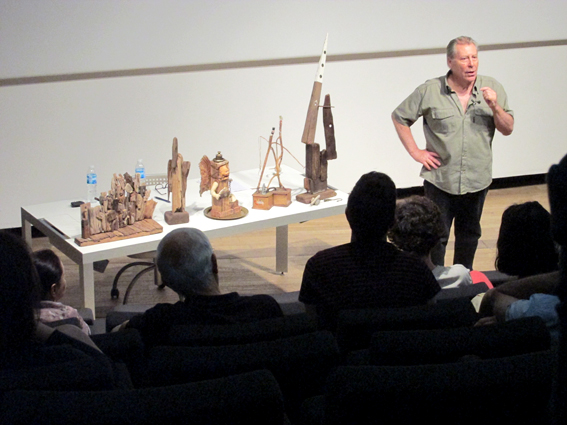
–Mauricio Kartun en Direccionario 2014–
¿Cómo se concibe una obra de teatro? ¿Dónde queda la figura del director – sus gestos, sus prácticas, sus gesticulaciones y discursos – cuando la obra toma forma y se estrena?
Más que cualquier artista de otra disciplina, el director de teatro produce una obra donde luego su cuerpo estará completamente ausente. Su momento de mayor presencia física coincide con el proceso de creación de la obra, un período de gestación durante el cual el director piensa, habla, convence, ensambla, gesticula y, de modo paradójico, actúa.
Cuando la obra toma su forma definitiva estas prácticas desaparecen irremediablemente. Como espectadores, nunca podemos acceder a esa “perfomance” que, justamente, es la que engendra toda la obra.
El trabajo del director es lo más inasible y efímero del hecho teatral.
Direccionario, el ciclo de conferencias performáticas curado por Mercedes Halfon y producido Carolina Martín Ferro, se propone reponer ese intervalo de creación ausente que implica la dirección teatral y busca reflexionar sobre el director teatral y su accionar como artista a través de las presentaciones de un conjunto de destacados directores teatrales contemporáneos y emblemáticos
Curadora del ciclo: Mercedes Halfon
Es licenciada en Artes, periodista y crítica de teatro. Actualmente escribe en el suplemento Radar de Página/12 y en la revista Teatro del Teatro San Martín y Brando. Escribió junto a Fernanda Nicolini la novela Te pido un taxi (Plaza Janés, 2009). Publicó el Epub Tres Islas (Determinado Rumor, 2011) y el libro de poemas Hebilla de pasto (Vox, 2012). Forma parte de la Antología de poesía argentina contemporánea Lo humanamente posible (El fin de la noche, 2008). En 2009 ganó el Premio Estímulo de Tea al periodismo gráfico. Es curadora del ciclo Invocaciones que se realizará a partir de octubre de 2014 en el Cultural San Martín.
Productora del ciclo: Carolina Martín Ferro
Es productora ejecutiva, actriz y socióloga. Participó en la producción de obras de teatro, festivales y residencias de arte. Se formó en producción teatral con Gustavo Schraier. Desde el 2001 ha actuado en numerosas obras de teatro. Coordina junto a Mercedes Halfon el ciclo Invocaciones que se realizará en el Cultural San Martín a partir de octubre de 2014.
CVs
Rubén Szuchmacher es actor, director, régisseur, docente y gestor teatral, egresado del Instituto Superior de Arte del Teatro Colón. Ha participado como actor en Visita, de Ricardo Monti, con dirección de Jaime Kogan, Boda Blanca, de Tadeusz Rozewicz, con dirección de Laura Yusem, Real envido, de Griselda Gamabro, con dirección de Juan Cosin, Tenebrae, de Alejandro Tantanian y Alejo Pérez Pouillieux; Cuento Alemán, de Alejandro Tantanian, El traductor de Blumenberg, de Juan Mayorga; Cine Quirúrgico, sobre una idea de Edgardo Rudnitzky; Escandinavia, de Lautaro Vilo, entre otras.
Como director ha realizado las puestas en escena de las siguientes obras: Sueño de una noche de verano, Rey Lear y Enrique IV, segunda parte, todas de William Shakespeare; Caligula, de Albert Camus; Decadencia, de Steven Berkoff; Polvo eres y Viejos tiempos, de Harold Pinter; Amor de Don Perlimplin con Belisa en su jardín, de Federico García Lorca, y La Biblioteca de Babel, de Jorge Luis Borges, ambas en codirección con Edgardo Rudnitzky; Galileo Galilei, de Bertolt Brecht; Babilonia, Muñeca y Amanda y Eduardo, todas de Armando Discépolo, El desalojo y La gente pobre, de Florencio Sánchez, Ifigenia en Aulide, de Eurípides, Mi querida, de Griselda Gambaro; Lo que pasó cuando Nora dejó a su marido o los pilares de las sociedades, de Elfriede Jelinek, El siglo de oro del peronismo, de Pedro Calderón de la Barca, Marcelo Bertuccio y Rubén Szuchmacher, Las troyanas, de Euripides/Sartre, Enrique IV, de Pirandello, Historias abominables, basada en textos de Bertolt Brecht, entre muchas otras.
Como régisseur ha realizado: La Voz Humana, de Jean Coc¬teau y Francis Poulenc; La muerte y la muchacha, de Gerardo Gandini sobre textos de Alejandra Pizarnik y Umberto Eco; Alicia en el país de las maravillas, de Marta Lambertini sobre el libro homónimo de Lewis Carroll; La oscuridad de la razón, de Pompeyo Camps y Ricardo Monti; Ein Brudermord (Un fratricidio), de Hans-Jürgen von Bose sobre texto de Franz Kafka; El cimarrón, de Hans Werner Henze, La vuelta de tuerca, de Benjamin Britten; Liederkreis, de Gerardo Gandini/Alejandro Tantanian, para el Teatro Colón de Buenos Aires, Ariadna auf Naxos, de Richard Strauss, en el Teatro Avenida. Su última producción fue “Ese grito es todavía un grito de amor, de Gabriel Valverde, sobre textos de Roland Barthes.
Como docente ha brindado sus talleres en muchas ciudades de Argentina como así también de México, Alemania, España, Brasil, Chile, Bolivia y Uruguay. Ha recibido los premios Trinidad Guevara, María Guerrero, Ace de Oro, Teatro del Mundo, Premio Getea, Florencio Sánchez por varios de sus espectáculos. Es autor de los siguientes libros: Archivo Itelman (Ediciones del Rojas, UBA, Buenos Aires), Notas para la puesta en escena y dirección (UNAM; México) y Notas para el aprendiz de dirección de teatro y afines (Paso de Gato, México).
Actualmente es director artístico de Elkafka espacio teatral y desde este año del Teatro Payró.
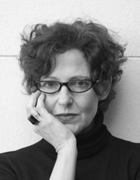
Mariana Obersztern Es docente, autora y directora teatral con una intensa actividad previa en las artes visuales. Entre sus primeros trabajos se cuentan Kandinsky (1988), La puntuación de la secuencia de los hechos (1989), Dens in dente (1997) y Lengua madre sobre fondo blanco (2001), obras con las que participa en festivales como: Festival de Teatro del C.C.R.R, Experimenta Teatro (Rosario), Festival Theater der Welt (Berlín, Alemania), Festival Internacional de Buenos Aires y Festival Internacional del Mercosur. Tiene a su cargo la coordinación del área de teatro del C.C.R.R (2005-2006), desde donde gesta el Proyecto Inversión de la carga de la prueba basado en la construcción de una obra teatral a partir de una instalación escenográfica. Entre otros de sus trabajos se encuentran El aire alrededor, por la que obtiene numerosos premios y nominaciones (Biodrama, 2002), Tu eres para mí (2007), Keine piano (2007), Espina no peito (2008),Si el destino viene a mí (Proyecto Manual, 2012), y las performances Remontando el Nídrog (Mamba, 2014), Para el pueblo lo que es del pueblo, junto a Agustina Muñoz (Galería Catena, 2014) y Pensamiento, cantidad necesaria (UBA, 2014), publicada por editorial Libretto. Lengua madre sobre fondo blanco y El aire alrededor han sido publicadas por la editorial Teatro vivo.
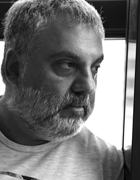
Alejandro Tantanian Director, autor, docente, actor y cantante. Ha participado en más de 60 festivales internacionales. Ganador de numerosos premios nacionales. Sus piezas han sido estrenadas en Argentina, Uruguay, Francia, Suiza, España, Italia, Bélgica, Austria y Alemania y han sido traducidas al inglés, francés, italiano y alemán. En Argentina: Patricio Contreras dice Nicanor Parra (2015); Almas Ardientes (2014) de Santiago Loza; El rastro (2014) de Margo Glantz; Anything Goes (2013) de Cole Porter; Nada del amor me produce envidia (2013) de Santiago Loza; El don de la palabra de Andrew Bovell (2013); Cenizas de Neil LaBute (2012); Cliff (acantilado) de Alberto Conejero (2012); Las Islas (2011) de Carlos Gamerro; Blackbird (2011) de David Harrower; Luci mie traditrici (2011) ópera de Salvatore Sciarrino; Los Sensuales (2008) de Alejandro Tantanian; Cuchillos en gallinas (2006) de David Harrower; Los Mansos (2005) sobre El idiota de Dostoievski; entre muchas otras. En el exterior: En el Nationaltheater Mannheim, (Mannheim, Alemania): Nie war der Schatten (2012) (No hubo sombra igual) de Alejandro Tantanian; Die Dreigroschenoper (2010) de Kurt Weill & Bertolt Brecht; Amerika (2009) sobre la novela homónima de Franz Kafka y La libertad (Freiheit) (2007) de Ariel Farace, Martín Tufró & Alejandro Tantanian; Instante (2008) ópera de Oscar Strasnoy con libreto de Alejandro Tantanian (París, Francia); Romeo und Julia (2006) versión de Alejandro Tantanian sobre la obra William Shakespeare, Luzerner Theater (Lucerna, Suiza); La Gabbia (2004) ópera de Tiziano Manca con libreto de Alejandro Tantanian, Opera de Lille (Lille, Francia); Muñequita o juremos con gloria morir (2003) de Alejandro Tantanian dirigida por Matthias Langhoff, Théâtre National de Toulouse – TNT (Toulouse, Francia); entre otras.

Emilio García Wehbi Artista interdisciplinario que trabaja en el cruce de lenguajes escénicos. En 1989 funda El Periférico de Objetos, grupo paradigmático del teatro experimental argentino. Sus espectáculos, óperas, performances, instalaciones e intervenciones urbanas han sido presentados en América, Europa, Oceanía y Asia. Ha sido premiado nacional e internacionalmente. Como autor ha publicado los libros “Ensayo sobre la Tristeza”, “Botella en un Mensaje”, ”Luzazul” y “Communitas”. Algunos trabajos: Cas que Arde (2015), Vértigo (2014), 58 Indicios sobre el Cuerpo (2014), Rey Lear (2013), Aurora (2013), Luzazul (2013), Cuando el Bufón se Canse de Reír (2012), Prefiero que me quite el sueño Goya a que lo haga cualquier hijo de puta (2012), Hécuba o el Gineceo Canino (2011), El (A)parecido (2010), Aura (2010), Dr. Faustus (2010), Chacales y Árabes (2009), El Matadero. Un Comentario (2009), Dolor Exquisito (2008), EL Matadero (Serie I, II, III, VI, V, VI; 2008-2003), Jakob von Gunten (2008), Woyzeck (2006), Bambiland (2005), La Balsa de la Medusa (2005), Lucha Libre (2005), Proyecto Filoctetes ( 2007-2002), Anna O. (2004), Moby Dick (2003), Los Murmullos (2002), Sin Voces (1999) Manifiesto de Niños (2005), La Última Noche de la Humanidad (2002), Monteverdi Método Bélico (2000), Zooedipous (1998), Máquina Hamlet (1995), Cámara Gesell (1994), El Hombre de Arena (2002), entre otros.
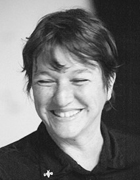
Vivi Tellas Directora de teatro y curadora nacida en Buenos Aires. Egresada de la Escuela Nacional de Bellas Artes “Manuel Belgrano” y de la carrera de Puesta en Escena de la Escuela Municipal de Arte Dramático. En 1990, con la creación del Proyecto Museos, fundó el Centro de Experimentación Teatral de la UBA. Entre 2005 y 2009 tuvo a su cargo la dirección artística del Proyecto de Teatro Documental Archivo White en el Museo Ferrowhite, en Ing White. Dirigió el Teatro Sarmiento durante ocho años, donde desarrolló el Proyecto Biodrama, transformando este espacio en el único centro experimental de la ciudad. Fue curadora de artes escénicas para el Centro Cultural Recoleta. Dirige Las Declamadoras, un grupo de recitadoras de poesía para Estación Pringles.
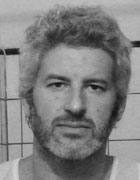
Alejandro Catalán nació en Buenos Aires en 1971. Es un reconocido director, actor, profesor y teórico. El estudio y taller que coordina desde el año 1999 es un referente ineludible del espectro formativo de Buenos Aires. Su prestigio se asienta en la particular manera de abordar el trabajo actoral. En sus clases o en sus obras (Foz. Dos minas, Solos, Amar) la actuación es asumida y afirmada con un nivel de protagonismo y despliegue infrecuente. Ha dado seminarios en muchas ciudades de Argentina y del extranjero tales como México DF, San Pablo, Montevideo, Barcelona y Madrid. Sus obras también han viajado por otros tantos países y han recibido premios. Sus escritos sobre teatro y actuación son bibliografía de diferentes cátedras avocadas a esta cuestión.
Pompeyo Audivert es actor, director teatral y dramaturgo. Desde 1990 dirige el Teatro Estudio El Cuervo donde dicta cursos de actuación. Se destacó como actor en obras como Postales argentinas, con dirección Ricardo Bartis; Hamlet o la guerra de los teatros, a partir del original de William Shakespeare con dirección de Ricardo Bartís.Esperando a Godot, de Samuel Beckett con dirección Leonor Manso. La hija del aire, de Pedro Calderón de la Barca y El Rey Lear, de William Shakespeare ambas con dirección de Jorge Lavelli. Fin de partida, de Samuel Beckett, con dirección de Lorenzo Quinteros y Pompeyo Audivert. Heldenplatz, de Thomas Bernhard con dirección Emilio García Wehbi. Marathon, de Ricardo Monti con dirección de Villanueva Cosse. El crítico, de Juan Mayorga con dirección de Guillermo Heras. Como dramaturgo y director realizó Recuerdos son recuerdos. junto a Ricardo Bartís y Alfredo Ramos. Museo soporte, junto a Hugo Fortuny. La Pesca. Carne patria, creación colectiva. LOMORTO, Carnavali dramático, creación colectiva. Unidad básica, creación colectiva Armando lo Discépolo, creación colectiva. Museo Ezeiza20 de junio de 1973, instalación teatral. Dirigió La Señora Macbeth, de Griselda Gambaro. La obra fue seleccionada en 2005 para participar en el V Festival Internacional de Teatro de Buenos Aires, el V Festival de Teatro del Mercosur y el I Festival de Teatro de Rafaela. Actualmente actúa y codirige junto a Rodrigo de la Serna y Andrés Mangone El Farmer, de Andrés Rivera, en el Teatro General San Martín.
Walter Jakob y Agustín Mendilaharzu(Buenos Aires, 1975) son dramaturgos, directores y actores. Juntos o por separado, trabajaron en decenas de obras de teatro y de films. En colaboración, escribieron y dirigieron cuatro obras: Los Talentos, por la que recibieron el premio Trinidad Guevara al Mejor Autor 2010; La edad de oro, que recibió el Premio Teatro del Mundo Mejor Dirección 2012; Capitán, estrenada en 2015 en el Festival Dois Pontos de Río de Janeiro y actualmente en cartel en Timbre 4; y recientemente Brecht, dentro del Ciclo Invocaciones en el Cultural San Martín. En 2014 realizaron en el Centro de Experimentación del Teatro Colón la puesta en escena de Velada Fantômas, obra musical a partir del radioteatro de Robert Desnos. Coprotagonizaron la película Historias Extraordinarias, de Mariano Llinás.
Etiquetas: Alejandro Tantanian, Conferencia Performática, Director Teatral, Dramaturgos de Buenos Aires, Javier Daulte, Mariana Obersztern, Mauricio Kartun, performance, ProaTeatro,Ricardo Bartis, Rubén Szuchmacher, Teatro
Proa Teatro | Sin comentarios »
October 22nd, 2015
Audioguía RAQS
 Una nueva audioguía para recorrer de manera interactiva la exhibición “Es posible porque es posible”, del colectivo artístico indio RAQS Media Collective. Incluye testimonios de los curadores Cuauhtémoc Medina y Ferran Barenblit.

Versión Mac/PC
Versión Móviles
September 16th, 2014
Fabio Mauri Videos
Tuesdays and Saturdays from 15 to 19.20 hs.
As part of the exhibition Fabio Mauri will be screened 8 documentary films with the records of its most important performances and an interview with the artist.
PROGRAM
‘Che cos’è il fascismo, 1971
(¿What is Fascism?) Length: 8’ 27’’
It was presented on April 2, 1971 in Film Studies Safa Palatino in Rome., with the participation of students from the National Academy of Dramatic Arts “Silvio D’Amico”, at the end of the seminar “gesture and behavior in today’s art”, by Giorgio Pressburger. The starting point of the performance was the memory of Hitler’s visit to Florence in 1938 (…) and the action is to rebuild the starring of the ‘Ludi Juveniles’: gymnastics, meetings, exhibitions fencing, skating, hymns and discuss about Mysticism Regime. In the performance, all the action happened in a rectangular red carpet with the symbol of the swastika in the center, including black forums divided by occupations: Artists, Agricultural Contractors, Engineers. There are also two small stalls bearing the Star of David, symbol of the racial discrimination of the fascist era. (…) (Dora Aceto, in Studio Fabio Mauri)
Ebrea, 1971
(Jewess) Length: 5’
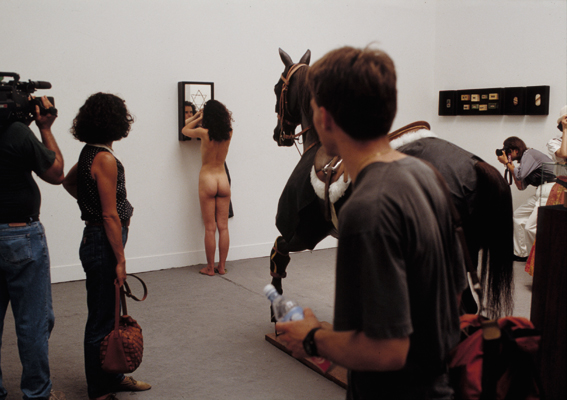
Alongside Che è il fascism, Mauri prepares a completely different performance. Ebrea is set in a haunting installation and its introduced for first time in 1971 in Venice, in the gallery Barozzi, and then will repeated several times, though not always with the presence of all elements. A female figure habits a small space organized as the museum of concentration-camp sculptures made of objects which, in the words of Maria D’Alesio, “simulate a human source.” Here the performance is combined with the installation Maurizio Calvesi define as “an inventory of tragic silences and ultrasound.” One of the more interesting aspects of the work is also a chilling example of corrosive critical analysis of the design: “It hinders the escape of secular security contemporary design, so confident in the progress” in the words of Mauri in the text accompanies the exhibition. In the center of the space a Horse Camping SS Harnesses harnessed Jewish skin and surrounded by other objects made with the Jewish Stroller family Modigliani 1940; Anna Cittterich real shoes Warsaw, made to itself; Ski gloves made with Oswald and Mirta Rohn, captured in Davos-Brzezinka – Ospedale Maggiore; Brushes, organic pigments and Jewish parchment – Oswirgin. Birkenau in 1940; Soap true Jew bait; Chair of Jewish skin – Nuremberg 1941; Samuel Morpurgo, first guest of the Treblinka camp in the same frame, made by Attila Rengstorf – Treblinka 1943; Ippolito March; Black Racket; Priscilla-glove; Bean bags; Jewelry-Laiback; Jewish Family. Facing a locker with mirror, scissors and a hair Haarschneidemaschine slicer is young nude, strands of hair that is cut up and with them the mirror image of the Star of David, also written on his chest next to the number lager than the Nazis replaced the name, and with it, all signs of identity. The Star of David also appears amplified three times on the walls around a phrase in Hebrew prophet Jeremiah: “A voice was heard in Ramah, wailing and loud lamentation: Rachel is weeping for her children and refusing to be comforted because no longer exist. “It is the banality of evil staging through a macabre collection of objects. Among them, the bag alludes to a more stable identity, endangered, threatened. The wall of suitcases presented at the Venice Biennale in 1993 (under a new proposal Ebrea), takes up the theme of dramatic divisions of the world and presented in Muro d’Europe. The facility is clearly linked to the tragic Jewish history as not only indicate the title, Muro Occidentale or Pianto and indications images Ebrea within the single open trunk, but also the artist’s biography, by the tragedy of their friends departed, never to return. However, the work becomes a universal symbol of all migration, exile all, everything, “World Pain”. If Ebrea, with the only female among dumb objects, performance is a melancholy solitude, Che è il thing fascism and Futuristic Gran Serata 1909-1930, are performances of the crowd, where the emphasis is on the public side and less intimate, where the brand’s vitality (real in the second, apparent at first), where not only many performers gorge scene, but many collaborate. A solitary female figure is the protagonist of Natur and culture, presented at the Galleria 2000 in Bologna in 1973, and then return to be several times under the title of Ideology and nature. (Laura Cherubini, 2012)
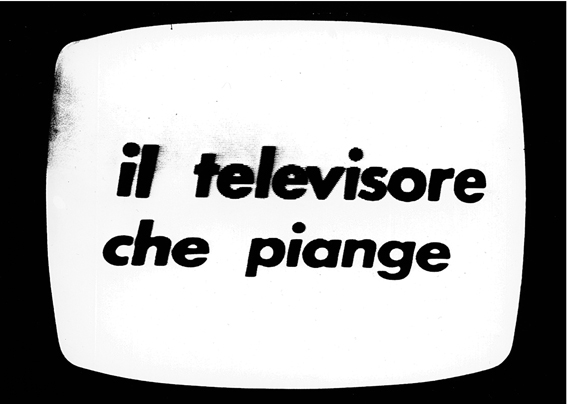
Il televisore che piange, 1973
(The television crying). Length: 2’ 41’’
The proposed action is within the transmission ‘Happening’, curated by Enrico Rossetti for the Italian Radio and Television (…) The author’s image appears in front of a screen with the words “The End”. Then, the transmission is interrupted, as a transmission failure, leaving about 60 seconds vacuum. Under white image feels a painful scream. (…) Many people called the RAI because of the curious and prolonged fault: someone crying in the empty screen. Mauri’s intention was political, saddened by the contradictions of everyday life in Italy. (Dora Aceto, in Studio Fabio Mauri)
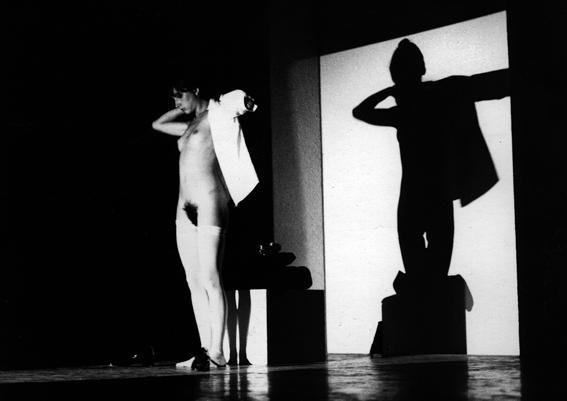
Ideologia e Natura, 1973
(Ideology and Nature). Length: 6’ 11’’
It is a performance held at the Galleria Duemilda, Bologna. A young fascist uniform “little Italian” undresses and gets to wear many times. Initially standing in front of a white cube performs this operation undress and re-dress in a natural way, and then at marks of a metronome, still does, but without logical order. Variations in the mode of dress with the same clothes change the ideological value of the uniform, prompting the viewer to reflect on the reasons for this mode of dress as anomalous. From the ingenuity of the performer and the combination of casual garments, the image changes and goes looking alternatively to the Ku Klux Klan, Harlequin, a character from an equestrian circus. This journey into the symbolic nakedness shows that the only fact of reality is the idea of nature, an idea that dominates over all clothing imposed by culture and by the ideological imaginary. (Dora Aceto, in Studio Fabio Mauri)
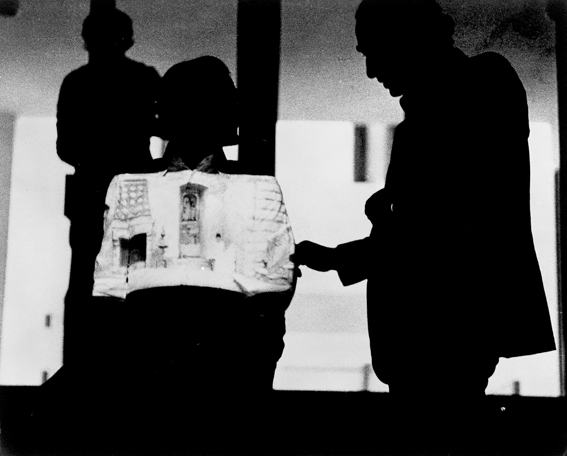
Intellettuale, 1975
(Intellectual). Duración: 2’
The performance was presented on the occasion of the inauguration of the new Galleria Comunale d’Arte Moderna in Bologna in 1975, with the participation of Pier Paolo Pasolini, a close friend of Fabio Mauri. The action takes place on the steps outside the gallery. Pasolini, in a booster seat, becomes a “human shield” projected on him his film ‘The Gospel according to St. Matthew’. (…) (Dora Aceto, in Studio Fabio Mauri)
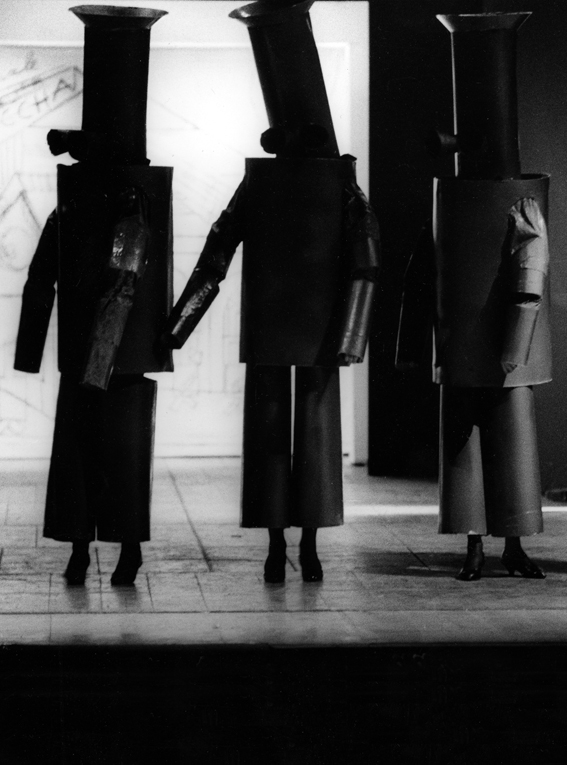
Gran serata futurista, 1981
(Great futuristic evening). Length: 9’ 49’’
The performance made his debut at the Teatro Municipal de L’Aquila, with students and teachers at the Academy of Fine Arts (…) The program follows a tripartite structure in order to highlight the many different languages used by futurism before the First World War (intervention), during the conflict, 1915-18 (experience on the front) to the post-war period (the disappointment and the dispersion of the Futurists). Aware of the historical avant-garde innovations, Mauri takes an analytical assessment of Futurism. (Dora Aceto, in Estudio Fabio Mauri)
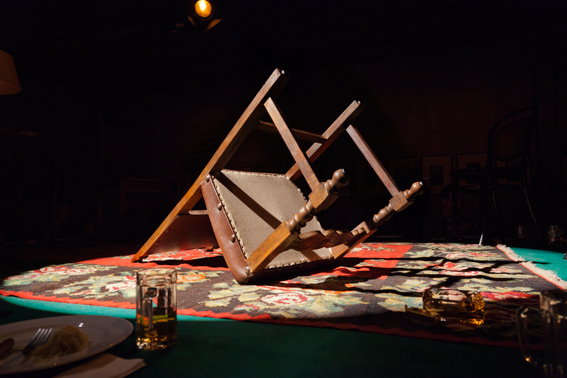
Che cos’è la filosofia. Heidegger e la questione tedesca. Concerto da Tavolo, 1989 (What is the philosophy? Heidegger and the German question. Concerto Table). Length: 8’ 57’’
“It takes place on a large square table served with beer and sauerkraut. Actors, with the tone of the highclass debate society, recite the verses of German poetry. Suddenly, the sound you hear in Italian, but with German accent, a real document based on the trial of Eichmann, related to the economic use of certain parts of the Jewish body (hair, gold teeth …) (…) the contrast is very strong; Germany generates one of the highest cultural and philosophical traditions, but also creates an inhuman abyss of death. Combining German folk songs and documents on Nazi radio torture of Jews, shakes inevitably awareness of these “ (Dora Aceto, in Studio Fabio Mauri)
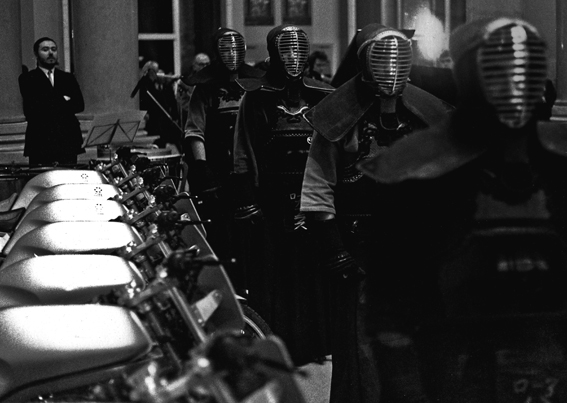
Omaggio al Gutai, 1990
(Tribute to the Gutai). Length: 11’ 10’’
Conducted in 1990 in the central hall of the Gallery of Modern and Contemporary Art of Rome for the opening exhibition Japan Vanguard: The Gutai Group in the fifties. An initial concert piano, percussion and motorcycles is the backdrop of a mime dressed in red holding dance ‘Sanbaso supermodern’ created by Kazuo Shiraga in 1957; followed by the simulation of a kendo match. The eastern and western cultures relate here with particular reference to the elements in Futurism.
(Dora Aceto, in Studio Fabio Mauri)
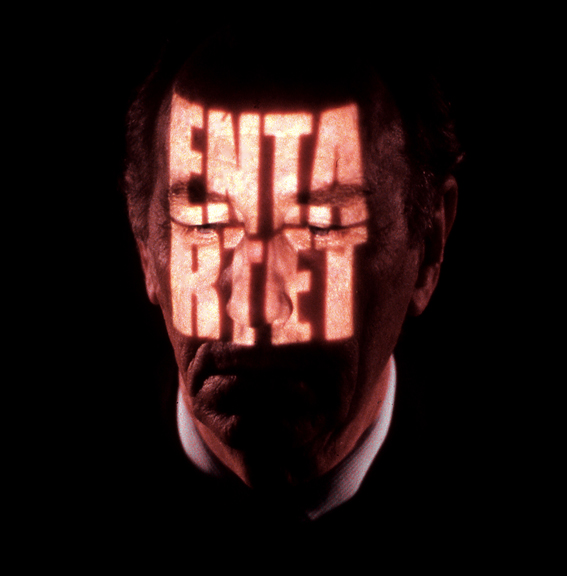
Ricostruzione della memoria a percezione spenta, 2004
(Reconstruction of memory in perception off). Length: 11 ’
http://www.fabiomauri.com/en/proiezioni/ricostruzione-della-memoria-a-percezione-spenta.html)
Etiquetas: Fabio Mauri, Performance, Videos
Films | Sin comentarios »
September 15th, 2014
ProaTeatro. Direccionario
On Saturday September 13 at 18 pm, Javier Daulte opens the Direccionario: Programa of Performing Conference
How a play is conceived?
Where is the figure of the director, their gestures, their practices, their gestures and speeches, when the work takes shape and is released?
Direccionario propose opening a window into that uncatchable time theater and rescue the missing actions of contemporaries and iconic directors as Javier Daulte Buenos Aires, Mauricio Kartun and Ricardo Bartis.
The series intends to reflect on the figure of the theater director and his actions as an artist. Once a month, the director starring a cross between performance art and theater, to present their universe of reference, ideas, emotions and stories that put in minimum words and gestures so ephemeral, intangible as private and theatrical conception .
Programming: four games, one Saturday a month from September to December 2014 in the Auditorium.
Curated by Mercedes Halfon
Production: Martin Ferro Carolina
Direccionario I – Javier Daulte
Saturday, September 13 – 18 pm
Direccionario II – Mauricio Kartun
Saturday, October 25 – 18 pm
Admission: $ 20 / Students with valid certification: $ 15
auditorio@proa.org / 4104-1001
For more images and / or interviews: prensa@proa.org or call 4104-1043 / 44.
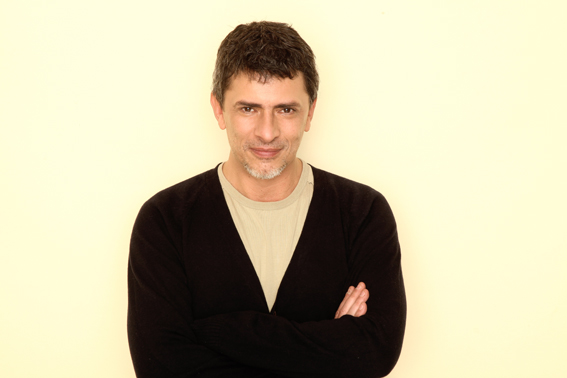
Javier Daulte
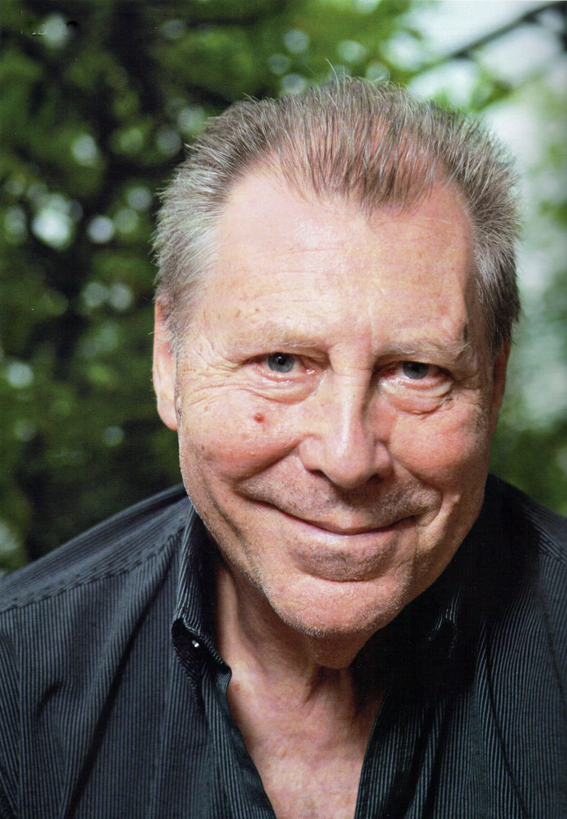
Mauricio Kartun
Etiquetas: Javier Daulte, Mauricio Kartun, ProaTeatro
Proa Teatro | Sin comentarios »
September 14th, 2014
ProaCine. September. Three exercises of interpretation, by Cristi Puiu
During September, ProaCine presents Three interpretation exercises, by romanian director Cristi Puiu. Based on Three dialogues and The story of the Antichrist, books written in the late nineteenth century by the russian philosopher and theologian Vladimir Soloviev; and freely inspired in the series of films Six Moral Tales, by french director Eric Rohmer; Puiu’s film an amazing and hypnotic acting exercise and a deep reflection on the nature of morality and religious faith.
Author of The Death of Doctor Lazarescu, Cristi Puiu was invited to conduct an intensive acting workshop three weeks in France, for which decided to work on the texts of Soloviev as a way to access the aesthetics of Rohmer, “The Soloviev`s book was published in 1900, and asked them to turn him into a 2011 text. They could improvise as they wanted, but they could´t lose the sense of the text. When I watch movies, sometimes I have problems, because I feel that the actors are pretending. For more correctly say his texts warn that their minds are elsewhere, only through the observation of their corporeality. I do not care about the specific words that the actors, I worked with were saying, as long as the saying them were mentally emotionally and spiritually present. “
Three interpretation exercises is part of the selection of films made by the international programmer Richard Peña during ProaCine 2014. The program of Peña seeks to study the relationship of performance as an expressive medium in contemporary cinema through a set of films centered primarily on the human figure.
FUNCTIONS
SUNDAY 7, 14 and 21 SEPTEMBER – AT 18 pm.
ADMISSIONS
auditorio@proa.org
FICHA TÉCNICA
Three Interpretation Exercises / Tres ejercicios de interpretación
Director: Cristi Puiu
País: Francia, Rumania/ Año 2013
Duración: 157 min
Formato: Digital
Producción: Nathalie Rizzardo, Anca Puiu
Productora: Chantier Normandes, Mandragora production
Cámara: Luchian Ciobanu, Edición: Dragos Apertri; Sonido: Jean-Paul Bernard;
Director de obra: Stephanie Hubert
Actores: Ludovine Anberree, Marion Bottolier, Ugo Broussot, Anne-Marie Charles, Anne Courpron, Perrine Guffroy, Hillary Keegin, Nathalie Meunier, Barnabe Perrotey, Jean-Benoit Poirier, Diana Sakalauskaite, Patrick Vaillant.
SINOPSIS
Cinema and philosophy –this thesis is not mine– create concepts. A concept gives some order to experience, and filmic shots allow seeing experience in a different way. In Three Interpretations, Puiu adapts the books Three Conversations, and A Short Tale of the Antichrist, by Vladimir Soloviov, which were written in the early 20th century. Everything began with an interpretation workshop given by the Rumanian director in Chantiers Nomades, Toulouse. This extraordinary film elliptically dedicated to Eric Rohmer began there, as actors were invited to use this philosopher’s ideas and to establish a dialogue with them in various places and situations; here¸ concepts are present over the filmic staging and, actually, they are the true main characters.
Divided in three different chapters (“The Mouse Is under the Table,” “The Cat Is on the Chair,” and “The Cat Is on the Bough”), in each of them four characters argue about love, death, the presence or absence of a deterministic character over our actions, freedom, the Antichrist, political pacifism, and Weerasethakul’s Syndromes and a Century. A not often quoted Biblical passage appears in the three episodes and, beyond the exegesis proposed in each occasion, this repetition suggests the way in which concepts live in people and have an influence over their points of view.
http://www.ficunam.unam.mx/en/index.php/programacion/pelicula-2014/trois-exercices-dinterpretation
Three films based on Three Conversations by Russian writer and philosopher Vladimir Solovyov.The actors’ ‘exercises’ develop into a minimalistic trilogy on cinema and literature, social and spiritual life, acting in film and in real life.
This trilogy (consisting of the films The Cat is On the Chair, The Mouse is Under the Table and The Monkey is On the Branch) is the result of a workshop at the French artists’ studio Chantiers Nomades. Puiu was inspired by Three Conversations, the masterpiece by 19th-century Russian philosopher Vladimir Solovyov. The treatise, subtitled ‘About War, Morality and Religion’, is embedded in refined character studies. In his subdued cinematography, Puiu always puts the acting first.
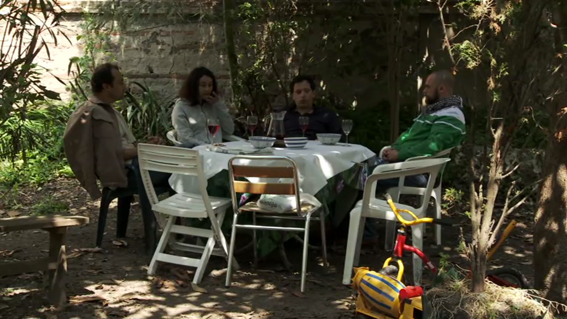
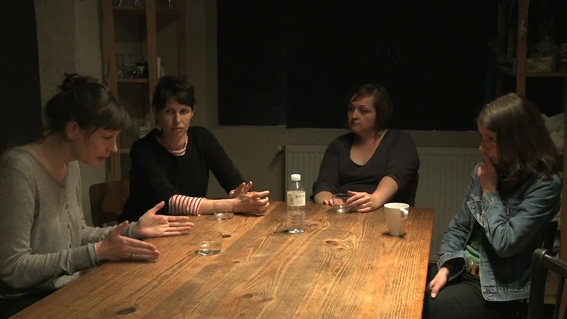
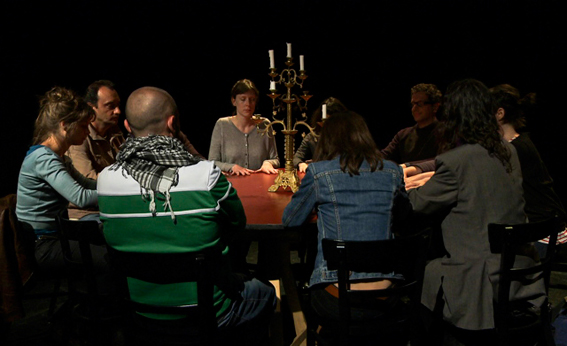
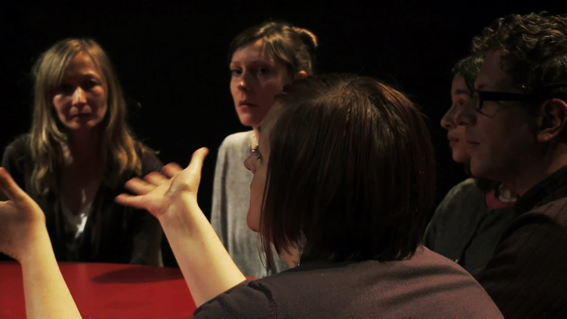
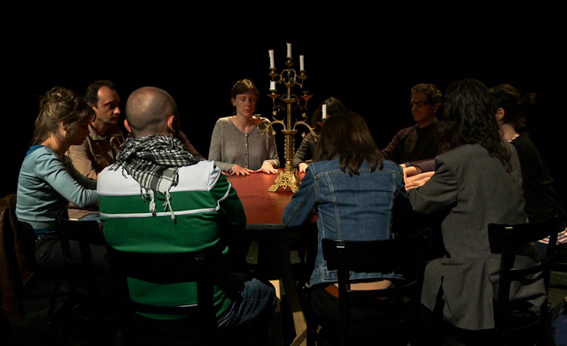
In The Cat… Anne-Marie and her daughter Ludivine receive their old friends Diana and Bernabé for lunch. In The Mouse… the academic Ugo takes his childhood friend Jean-Benoit, a soldier, out to lunch with Patrick and his wife Marion. In The Monkey… we see the girlfriends Hillary, Perrine, Anne and Nathalie talk as they have lunch. All discuss life, friendship, war and faith. In the evening, all the groups meet in a light-footed scene in which they hold a séance.
http://www.filmfestivalrotterdam.com/en/films/trois-exercises-d-interpretation/
DIJO LA PRENSA
Puiu’s potentially dry experiment proves by turns sobering, ironic, absurd and cathartic, the repeated text registering differently every time thanks to niceties of staging, camera placement and a guiding visual aesthetic that loosely evokes the cinema of Eric Rohmer (Puiu has even confessed to thinking of “Interpretation” as his “Moral Tales”). The first segment’s sedentary setup exposes the fragile nature of academic complacency, its lengthy static group shots artfully transforming into emotionally charged closeups. The one-room location of the second segment, however, lends the characters space to wander as Luchian Ciobanu’s lensing expresses the same vague restlessness that affects the characters. The film’s extraordinarily nuanced mise-en-scene concludes with the third installment’s two-tiered space and interconnected rooms, where players navigate freely and purposefully.
Revista Variety, por Ronnie Scheib
http://variety.com/2013/film/reviews/film-review-three-exercises-of-interpretation-1200991802/
The amazingly flexible camera and sound work are of course essential to create the illusion that the viewer is eavesdropping on actual, authentic conversations, but above and beyond everything else, there is this team of unknown performers who, in what sounds like a condensed Mike Leigh pre-shoot session, had just three weeks to work out with Puiu the script in all its details and to perform it on camera (each of the episodes took three days to shoot). And yet, they rarely put a foot wrong, if at all.
Screen Daily, por Dan Fainaru
http://www.screendaily.com/reviews/the-latest/three-exercises-of-interpretation/5057216.article
Etiquetas: Cristi Puiu, New Romanian Cinema, Three exercises of interpretation
Films | Sin comentarios »
September 13th, 2014
ProaCine. August: Abbas Kiarostami
In August, ProaCine presents a series of films dedicated to the iranian director Abbas Kiarostami. For three consecutive Sundays, a fiction, a discussion and a mediometraje where the author displays his most poetic, philosophical and cinephile profile, and unmistakable style that established him as a figure of international independent cinema. In addition to the premiere in a new digitized Shirin version, the mediometraje Roads of Kiarostami is presented for first time in Spanish dialogue between Kiarostami with the director of the Cinémathèque Suisse, Frédéric Maire.
FUNCTIONS
Sundays 17, 24 and 31 August -
16 pm.
Roads of Kiarostami (2006 32`)
Dialogue in the Swiss Cinematheque (2012, 45 ‘)
18 pm.
Shirin (2008 92`)
For admissions: auditorio@proa.org / 4104-1001

Press Kit
ROADS TO KIAROSTAMI (2006, 32`)
In this short experimental film, which Kiarostami made en passant as it were, it looks as if the master wanted to take a philosophical break, in order to catch his breath. He has put together the elements from his own culture that he admires: photography, poetry, classical music and film. Leitmotif is the road, in a literal and metaphorical sense.
(http://www.filmfestivalrotterdam.com/en/films/roads-of-kiarostami/)
DIÁLOGO EN LA CINEMATECA SUIZA (2012, 45`)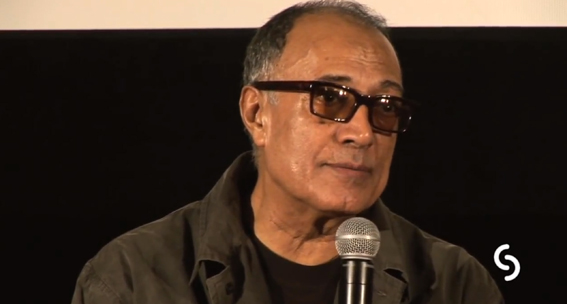
SHIRIN (2008, 95`)
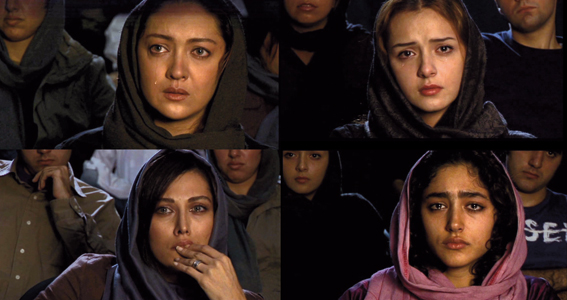
In 2008, Kiarostami directed the feature Shirin which features close-ups of many notable Iranian actresses and French actress Juliette Binoche as they watch a film based on a part mythological Persian romance tale of Khosrow and Shirin with themes of female self-sacrifice. The film has been described as “a compelling exploration of the relationship between image, sound and female spectatorship.” The film depicts the audience’s emotional involvement with the story. The story is read between the tragic and kitsch by a cast of narrators led by Manoucher Esmaieli and is accompanied by a historical “film score” by Morteza Hananeh and Hossein Dehlavi.
Acknowledgement: Cinémathèque Suisse, Festival Internacional de Cine de Cartagena y Festival Internacional de Cine de Hong Kong

Etiquetas: Abbas Kiarostami, ProaCine, Roads to Kiarostami, Shirin
Films | Sin comentarios »
September 12th, 2014
ProaCine 2014
The films chosen by Richard Peña, program director of the Lincoln Center Theater since 1988, New York Film Festival programmer and cycle prestigious New Directors / New Films. Being one of the greatest popularizers of independent film in the United States, was invited by Proa to select films that are part of the 2014 schedule.
AUGUST
Shirin (2008), Abbas Kiarostami
Features: Sundays 17, 24 and 31

SEPTEMBER
Three exercises of interpretation (2013), Cristi Puiu
Features: Sundays 7, 14, 21 and 28
OCTOBER
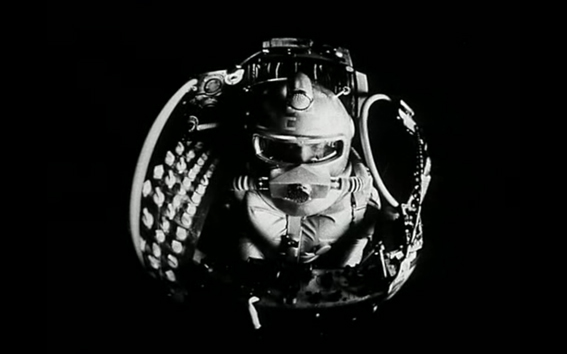
First on Moon (2005), Alexei Fedorchenko
Features: Sundays 5, 12, 19 and 26
NOVEMBER
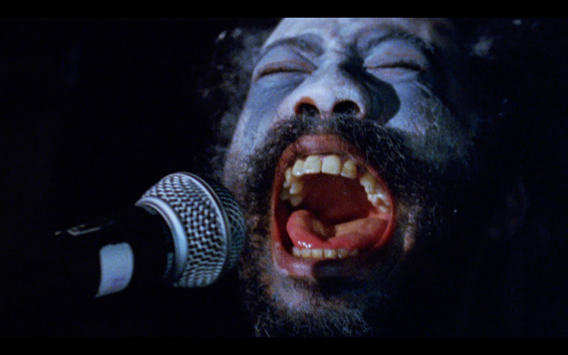
A Spell to Ward off The Darkness (2013), Ben Rivers and Ben Russell
Features: Sundays 2, 9, 16 and 23
Etiquetas: Abbas Kiarostami, Alexei Fedorchenko, Ben Rivers, Ben Russell, Cristi Puiu, ProaCine, Richard Peña, Shirin
Films | Sin comentarios »
September 11th, 2014
Urgent Action Meeting
Tuesday 8 July 2014 – 10 to 19 hrs. Fundación Proa Auditorium
Free activity. Space is limited. Certificate of attendance will be given to those who can prove participation in the whole day.
Open until July 4 Registration.
Download form and send coloquio@proa.org
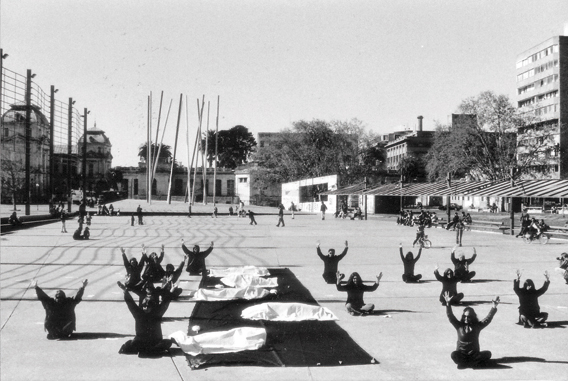
m.a.m mujeres artistas en movimiento, Despenalización del Aborto, 2003 Documentación fotográfica de intervención urbana realizada en la Plaza 1º de Mayo, Montevideo, Uruguay. © m.a.m artistas en movimiento
Beginning Saturday, July 5 at 17 pm, Fundación Proa presents Urgent Action, a South American panorama of artistic interventions in urban space from the 90s to the present. The exhibition brings together the work of groups and artist collectives from Argentina, Bolivia, Brazil, Chile, Paraguay, Peru and Uruguay taking the city as a stage and support of him production.
As part of the exhibition, on Tuesday July 8th Urgent Action Meeting, a day that proposes a mapping of the various forms and intervention strategies that take the city as a stage from clusters and groups of artists that presents the display. The day in Proa offers the opportunity to learn the history of each of the participating groups, as well as a tour of their actions and the ability to talk directly with the players.
The exhibition includes records of urban interventions carried out by artists from multiple disciplines challenged by political, social and economic reality launched art to make visible issues like women’s rights actions, political corruption, impunity, racism the ecology and indigenismo, among other topics.
Curated by specialists and researchers Rodrigo Alonso y Cecilia Rabossi, the exhibition has the support of Ternium and Tenaris and Techint Group divisions and continued the series of exhibitions planned by Proa deepen the reflection on its relationship to contemporary art with the city, like City Editings (1999) Urban Spaces (2009) and Buenos Aires (2013).
Participating in Urgent Action Meeting
Arte correo: Clemente Padín
Colectivo Sociedad Civil: Gustavo Buntinx
Cuadernos de Movilización: Nadinne Canto Novoa – Diego Parra Donoso – Juan Pablo Torrealba
Escombros: Luis Pazos
Etcétera: Federico Zukerfeld – Loreto Garín
Frente 3 de Fevereiro: Daniel Lima – Felipe Brait
Iconoclasistas: Julia Risler – Pablo Ares
Javier López – Erika Meza
Mujeres Artistas en Movimiento: Ana Aristimuño – Andrea Sica – Victoria Martínez
Mujeres Creando: Danitza Luna – Carolina Ottonello
Mujeres Públicas: Magdalena Pagano – Fernanda Carrizo – Lorena Bossi
Opavivará: Daniel Bastos
Viva Laura Pérez: Javier Soria Vazquez